
Tiverton has a long history, with the town’s name first recorded in King Alfred’s will (written about 885 AD).There, the name was ‘Twyfiride’, meaning ‘two-fords’, later expanded to ‘two-ford-town’ – Tiverton. The True lamentable discourse of the burning of Teuerton in Deuon-shire the third day of Aprill last past, about the hower of one of the Clocke in the after-noone being Market day, 1598. (Anon), now available to read online, was printed by Thomas Purford, London, in 1598.
Wofull Newes from the West Partes of England, being the Lamentable Burning of the Town of Teverton in Devonshire upon the 5th August last, 1612, by the same anonymous author, was printed by Thomas Panier, London, in 1612, and it can also be read online as also can A View of Devonshire by Thomas Westcote, 1630, edited in 1845, and published by W.Roberts, Exeter. This includes much fascinating information about Tiverton and surrounding settlements, especially in pages 98-110. A genealogical history of the noble and illustrious family of Courtenay. In three parts. By E. Cleaveland, 1735, printed by E. Fairly, can be read online, and includes, in Part 3, much information about the history of the Courtenay family in Tiverton. One of the earliest books on the town, not as yet available online, is Memoirs and antiquities of the town and parish of Tiverton in the county of Devon, faithfully collected from ancient records by John Blundell, published in 1712 includes, in Part 3, detailed information about the Courtenay family in Tiverton. The third, Of that branch is in England Until recently, the standard history was Memoirs of the Town and Parish of Tiverton by Martin Dunsford, published in 1790: this can be read online, In 1836 George Boyce completely rewrote and published a new version of Dunsford’s History. The entry for Tiverton in Magna Britannia Volume 6, published in 1822,can also be read online, as can William Harding’s History of Tiverton in the County of Devon, published in 1845, Frederick John Snell’s Chronicles of Twyford, published in 1892, The Taking of Tiverton with the Castle, Church and Fort by Sir John Fairfax, published in 1645, and the section on Tiverton from Devon by W.G.Hoskins, published in 1954. The Report of the General Board of Health by Thomas Webster Rammell, published in 1851, can also be read online. (This contains maps and useful information on the Town Leat etc.).The History of Devonshire from the Earliest Period until the Present by Rev Thomas Moore, published in 1829, includes, on pages 393 and 394, an interesting early description of John Heathcoat’s lace factory. Chapter 7, Volume 1 of the The Book of the West by Sabine Baring-Gould, published in 1899, includes a number of amusing anecdotes about Tiverton. John Prince’s ‘Worthies of Devon’, or’Danmonii [sic] orientales illustres’, first published in 1697, includes much information about Tiverton families, including the Courtenays and Carews. The 1810 edition can be read online:
Picturesque Views on the River Exe, Tiverton, Printed for J. Chaplin by T. Parkhouse of Bampton Street, 1819, and including 7 aquatint views ‘Perhaps the most appealing and attractive book ever produced in Tiverton’. (Peter Maunder).
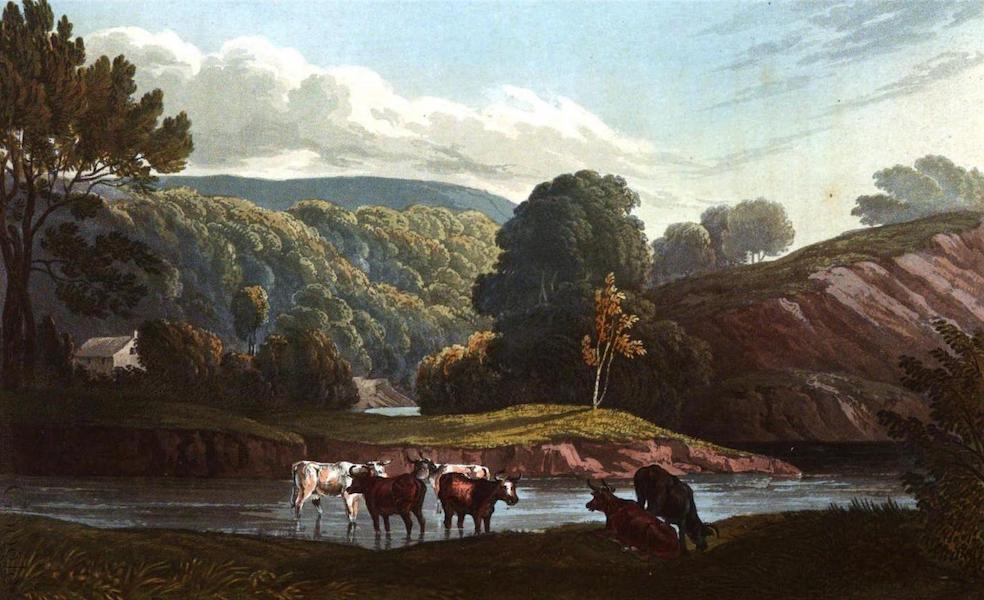
View on the Exe from ‘Picturesque Views on the River Exe’ (1819)
The Autobiography of an English County Family since 1700,by Charles Rossiter Forwood, published at Malbourne, 1889, which can, with recent explanatory notes, be read online, includes considerable detail about Tiverton in the early 19th century, especially Warnicombe House, which was bequeathed to his father, Thomas Forwood, by John Weech in 1808.
Chapter 4 of Loosemore of Devon, an Outline Family History, an online resource by W. R Loosemore, 1987, (http://www.loosemore.co.uk/Chapter4/CHAPTER4text.htm} includes much detail about Tiverton, including the early history of the wool cloth trade in the town.
Peasant Life in the West of England by Francis George Heath (Sampson, Low, Marston, Searle and Rivington] includes extensive sections on the parish of Halberton, which abuts the parish of Tiverton in many places, in 1870 and 1881. The 4th edition may be read online.

In 2004 a new History of Tiverton (Tiverton War Memorial Trust) by Mike Sampson was published, correcting previous misconceptions, giving, much new information and bringing history up to the opening of the new Mid Devon District Council Offices in Phoenix House early in 2004. The Book of Tiverton (Halsgrove) by Charles Noon, published in 2008, Tiverton and the Exe Valley (Phillimore) by Mary de la Mahotiere, published in 1990, and Tiverton: A History and Celebration of the Town (Francis Frith Collection/Ottakars) by Peter Belcher and Twyford Writers, published in 2004, are well illustrated histories. Tiverton Cloth, The Story of the Town’s Woollen Trade 1475 -1815 (Short Run Press), by Peter Maunder, was published in 2018, and it includes an appendix, The Tiverton Cloth Seal, 1660 -1810, by Jane Evans. Partisan Politics: Looking for Consensus in 18th Century Towns (University of Exeter Press) by Jon Rosebank, published in 2021, includes an extensive section on the political crisis in Tiverton in 1723/1724. (A History Cafe podcast based on this book can be accessed) Footprints in the Sand, the Story of the Carews of Devon 1086 – 1945 (Dubois Publishing), by Rivers Carew , published in 2018, includes much interesting detail about the Carew family in Tiverton. Lost Princes of France – the Courtenays from Latin Emperors to Earls of Devon by Jonathan Spangler (2022), is a useful online history https://dukesandprinces.org/2022/10/21/lost-princes-of-france-the-courtenays-from-latin-emperors-to-earls-of devon/#:~:text=This%20is%20the%20story%20of,in%20the%2017th%20century.
A Genealogical History of the Noble and Illustrious Family of Courtenay in Three Parts by Ezra Cleaveland (Edward Farley, Exeter), published in 1735, includes, in Part 3, much information about the Courtenay family at Tiverton Castle. This book can be read online, Part 3 starting on Page 111: https://archive.org/details/genealogicalhist00clea/mode/2up
‘Exhorting and Persuading’ :Petitions, Rhetorical Strategies and the Burning of Tiverton by Rebecca Tomlin, University of Cambridge, 2016, examines responses to fires which burnt down much of Tiverton in 1598 and 1612, showing how pamphlet descriptions contrasted with the petitions for aid that were recorded in official documents.https://manyheadedmonster.com/2016/11/16/exhorting-and-persuading-petitions-rhetorical-strategies-and-the-burning-of-tiverton/
‘The Water Mills of Tiverton’ (Leat Press/Devon Museums) by Barbara Keane, with Dot Butler and Martin Bodman, was republished in 2004. and ‘Renegado’ John Were, truly a Hero (Lower Hazel Books) by Douglas Rice, published in 2019, includes much detail about Tiverton and the surrounding area during the English Civil War. John Greenway 1460-1529 Merchant of Tiverton & London A Devon Worthy (Maslands) by A. Welsford, published in 1984, is a short biography of perhaps the greatest tiverton cloth merchant. ‘Georgian Tiverton: The Political Memoranda of Beavis Wood. Edited with an Introduction by John Bourne. (Devon & Cornwall Record Society), published in 1986, provides a fascinating picture of life in Tiverton during the late 18th century. The Buildings of England: Devon (Penguin/Yale) by Bridget Cherry and Nikolaus Pevsner, published in 1989, provides a detailed description of the town’s architecture. The Lost Courts of West Exe (Maslands) by Tom and Jeanne Waller, published in 1998, examines the history of this type of housing in West Exe. The 99 Newsletters published by this Society provide a wealth of information about Tiverton, including the town’s history and development, its buildings, industries, institutions, and notable citizens, with many contributions from the Tiverton Museum of Mid Devon Life. Jane Evans has compiled an index for the 1988-2005 Newsletters TCS. INDEX (1). Tiverton History is an excellent online resoource, regularly updated, for many aspects of the town’s past, including photographs, pictures, films, videos and published materials. A large volume of research material, including newspapers, maps, photographs etc is held at, and can be accessed, at this museum. The Devon Historic and Market Towns Survey for Tiverton, (Cornwall Archaeological Unit), published in 2014, includes much of interest about the town’s History and Archaeology. Genuki includes a good and largely up to date, bibliography. Wikipedia contains a useful summary of Tiverton’s history and geography; also biographies of ‘People from Tiverton‘ (among others John Gabriel Stedman, John Taylor Coleridge, Joyce Wethered (Lady Amory) and the poet Edward Capern should surely be included); and ‘People from Mid-Devon’.’Telling our Story, Finding our Roots’, is a Devon Development Education project, based in the town at the Tiverton Museum from 2019-2020, and its website includes much useful information about diverse and multicultural communities, past and present,who have lived and worked in the town.
A short, illustrated, History of Tiverton Borough Police 1845-1943, extracted from The Journal of British Police History,can be accessed at https://british-police-history.uk/f/tiverton
Princess Katherine of York, Countess of Devon
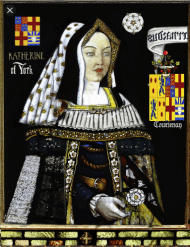 A short talk by Clare Ridgway for the Tudor Society recounts the story of Princess Katherine of York, sixth daughter of King Edward IV, and Countess of Devon, who died at Tiverton Castle in 1527. It can be watched at:
https://www.tudorsociety.com/november-15-katherine-of-york-countess-of-devon/
Please also see the article on Katherine of York, Countess of Devon, and the Courtnays by Rebecca Starr Brown.
Telling Our Stories is a community heritage and oral history project.
Our aim is to find, share and celebrate the hidden histories of Devon’s diverse and multicultural communities, past and present.
The Tiverton and District Directory 1894/1895 (Tiverton Gazette Office), White’s Directory for Devon, 1878/1879, and many other Devon Directories, dated between 1850 and 1919, can be read online, as can a list of traders in The Universal British Directory of c 1794. as well as a list of names in Pigot’s 1822 Directory. A list of textile workers who moved to Tiverton with John Heathcoat in 1816 can also be accessed online, as can a list of Tiverton Freeholders in 1783, and information about wool staple marks.
William White’s History, Gazetteer and Directory of the County of Devon, 1850, can be read online.
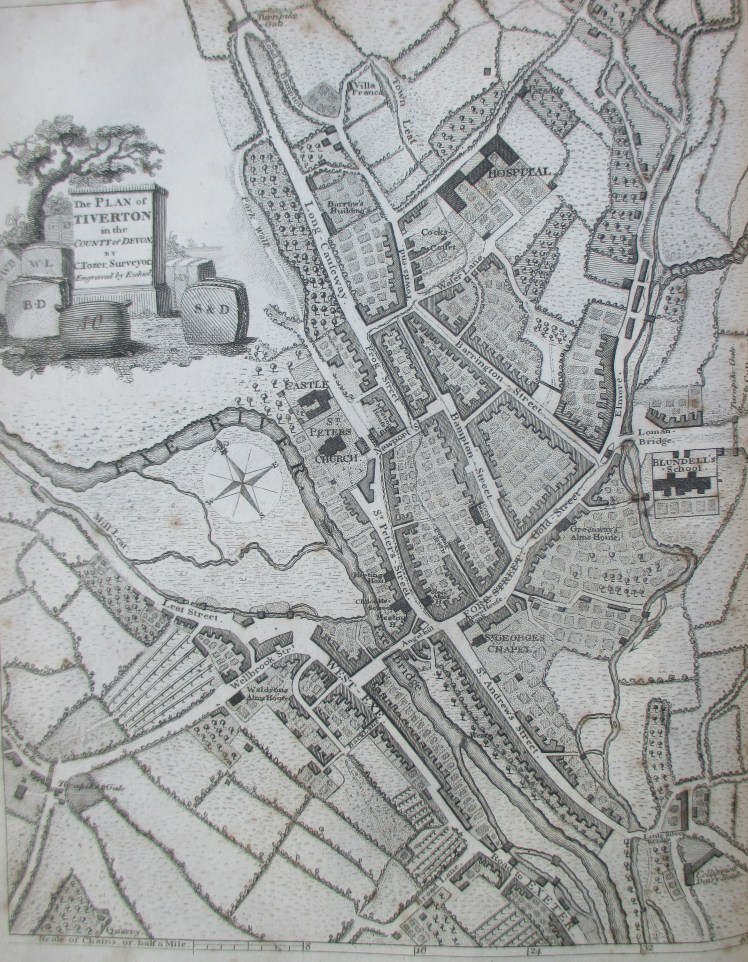
The Tithe Maps, mainly from 1836-1846, for Tiverton and all other Devon Parishes can be accessed online; and Ordnance Survey maps of many scales and types, approximately from 1842-1961, as well as Bartholemew maps, can be viewed on the National Library of Scotland website. A more detailed Historical Map Survey for Devon was produced by Mrs Emma Waldron for Devon Heritage Services in 2013. Printed Maps of Devon 1575 – 1837, Second Edition, by Kit Batten and Francis Bennett, is a comprehensive online collection of maps for the period, and they have also produced another detailed online collection, The Victorian Maps of Devon 1837-1901, Second Edition.
Jane Evans, assisted by Barbara Keene, has researched and written three lists, with historical notes, of monumental inscriptions at Tiverton churches. The first is for monumental inscriptions in St Peter’s churchyard, 1646-1928; the second is for monumental inscriptions inside St Peter’s church, 1524 – 1992; and the third is for monumental inscriptions, both in the church and in the churchyard, at St George’s church, 1733 – 1926.
MONUMENTAL INSCRIPTIONS St Peter’s Tiverton
MONUMENTAL INSCRIPTIONS St Peter’s Tiverton (1),and
MEMORIALS ST GEORGE’S CHURCH & YD
(Please also see the fine,interactive state of the art guide to Butterleigh Churchyard.)
Also, the 11th century Domesday Book is now freely available online as are information and images from current research into the unique Exon Domesday for the south-west counties. FreeCen are in the process of making all censuses between 1841 and 1891 freely available. Transcriptions of the 1841 and 1851 censuses for Devon are now largely complete and much information for Tiverton is also available for later censuses. A satellite map of Tiverton may be viewed online, as can an economic profile of Mid Devon, published in 2014. The Tiverton Gazette/Mid Devon Gazette 1860-1939 may be searched and read online, but a subscription may be required. Lost Pubs in Tiverton gives details for closed public houses in Tiverton. The Name Index of Devon Slave Owners taken from the records of the Slave Compensation Commission of the 1830s, includes six people living in Tiverton, the most prominent name being Caroline Robley, widow of John Robley, an owner of several major slave plantations in Trinidad and Tobago. (She died in 1843).
Mid Devon District Council have produced a useful online description, with excellent maps, of the Evolution of Mid Devon Landscape, which includes geological setting, drainage and topography, historic landscape, conservation and agricultural land classification.
Historic England have in 2023, published an excellent new guide to the building stones of Devon, titled Devon Building Stones of England. This, an updated version of a guide published by English Heritage in 2017, examines the large variety of local stones used in the county’s buildings.
English Heritage have written an online Devon_Building_Stone_Atlas.
The British Geological Survey have produced a report on the geology of OS 1;25000 Sheet SS91 SE, which covers most of Tiverton, and some of the surrounding area. Also see http://ussher.org.uk/wp-content/uploads/journal/1994/20-Hodgson_Laming_1994.pdfThis article, entitled ‘PERMIAN BRECCIAS AND PLEISTOCENE IN TEMPORARY EXPOSURES
AROUND TIVERTON, DEVON, AND THEIR STRATIGRAPHICAL CONTEXT‘, by
R. L. P. HODGSON AND D.J. C. LAMING, gives detailed examples of geological exposures in and close to Tiverton.

A brief, finely illustrated, online history of Blundell’s, was produced for the school’s 400th anniversary in 2004. Transcripts of many original documents about Blundell’s history, including Peter Blundell’s will, were compiled by Benjamin Incledon in 1790 under the title of Donations of Peter Blundell, founder and benefactor to the free grammar school at Tiverton: the 1802 edition, with later handwritten additions, can be read online; a paperback edition was published by Nabu Press in 2012. The Old Blundellian Register 1770-1932 can be read online. Recent books on the school include The Making of an English Public School (Hiroona Publications) by M J W Huggins, published in 1982; A History of Blundell’s School (Blundell’s) by Mike Sampson, published in 2011; The Book of Blundell’s (Halsgrove) by Charles Noon, published in 2002, with a second edition in 2008; and Boarding School. Blundell’s 1986, a photographic record by Andrew Nadolski, published in 2016. ‘Young Man’s Desire’ – Rescuing Memories of Blundell’s School in the 1960s and 1970s by Ron Madocks is an entertaining online description of the author’s time at the school. Among earlier books Blundell’s Worthies by M.L. Banks, 1904, , may be read online, as can Frederick John Snell’s Blundell’s : A Short History of a Famous West Country School (Hutchinson), published in about 1928. The Life and Times of Abraham Hayward Q.C. Victorian Essayist by Anthony Chessell (2009) includes a description of his time at Blundell’s. R.D.Blackmore’s famous 1869 novel Lorna Doone , partially set at Blundell’s in the 17th century and Edward Hutton’s unpublished ‘Fragments of an Autobiography‘, which includes fascinating reminiscences of Blundell’s and Tiverton in the 1890s. Wikipedia lists biographies of ‘People Educated at Blundell’s School’ . (Although not all those listed e.g. Stephen Spender, were actually educated at the school and others, including the French Resistance war hero Gerald Keun, and, currently, Rupert Charlesworth, have a strong claim for inclusion!). See also ‘Notable Old Blundellians’. The Blundell’s Muniment Room holds extensive archival material relating to the school’s history. (Archivist: Mike Sampson). Blundell’s Writers 1604 – 2004 (Lazarus Press) by John Hollands, published in 2004, gives brief biographical details and outlines the published work of 88 past pupils and masters at the school. The Blundell’s Weather Station provides up to date information for many aspects of the weather at the school (and Tiverton), as well as records dating back to 2013. Following fifteen years of distinguished service as the Blundell’s Archivist, Mike Sampson retired at the end of 2021, and his successor, Catherine Flavelle, launched the first Newsletter,Archivium, in March, 2022. Further editions may be accessed online, including that for January 2024.https://my.blundells.org/devoffice/archive/_pdf/archivium/archivium_2024-01.pdf
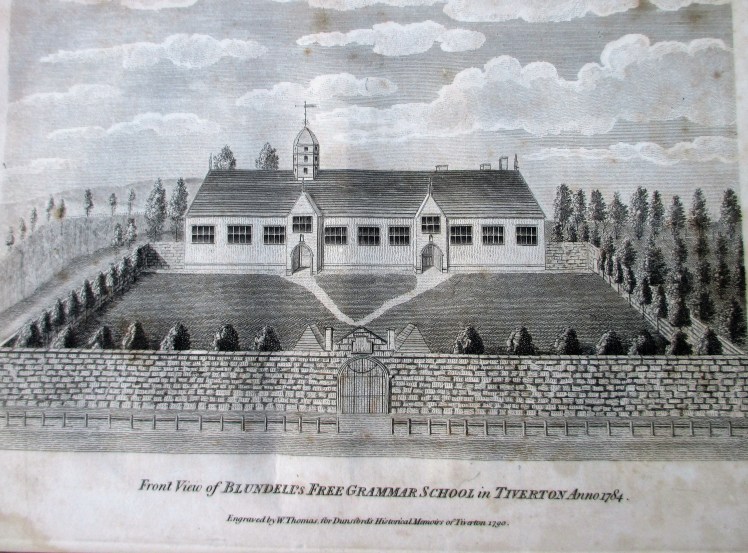
Tiverton has a remarkable variety of school buildings, dating back to the early 17th century at Old Blundell’s and Chilcot School. Although it does not include local examples England’s Schools: History, Architecture and Adaptation (English Heritage), by Elain Harwood, 2010, provides an excellent overview of school architecture. Nigel Arnold has written a brief online History of Tiverton Grammar School which also looks at the school’s antecedents.
Pippa Griffith, Curator of the Mid Devon Museum, has written a short online history of John Heathcoat and his textile factory: ‘John Heathcoat: The Industrialist Inventor who Transformed a Devon Town’ This includes many fine pictures and photographs from the museum’s collection.The section on John Heathcoat in a slightly later edition of Samuel Smiles’ famous 1859 book on 19th century entrepreneurs ‘Self Help’ can be read online( Chapter 2).
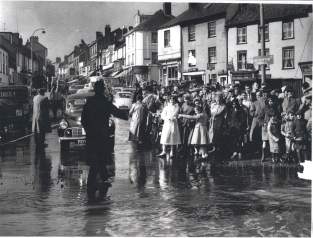
The Environment Agency have provided an extensive archive of images of the devastating ‘100 year recurrence interval’1960 flood 1960-flooding-in-tiverton-f , a year when Tiverton received over 59 inches of rainfall. The Exe Valley Flood Management Plan (Environment Agency, 2012) includes a section on Tiverton, and estimates that another 100 year recurrence interval flood would affect between 1000 and 2000 properties in the town.
Mid Devon District Council have published ‘Historical Records of Flooding’, which includes many useful maps as well as newspaper cuttings and other published sources dating back to 1625.
The mysterious disease, probably ‘sweating sickness’, which caused at least 400 deaths in Tiverton in 1644, is discussed in Wikipedia.
‘Tiverton Castle or The Siege of Tiverton in 1645‘, a three act play with songs by Henry Thomas Heathcote, 1829, can be read online, and it is also available at the Mid Devon Museum in a new printed edition with a forward by Douglas Rice (Tiverton Castle, 2016). Hannah Cowley’s best known play, written in 1780, ‘The Belle’s Stratagem’ , which was revived with great acclaim at the Southwark Playhouse in 2011, and subsequently on tour, can also be read online. Hannah Cowley: Tiverton’s Pioneer Feminist (1743-1809) by Mary de la Mahotiere, was published by Devon Books in 1997.
The Grand Western Canal (David and Charles) by Helen Harris, 1973, is an excellent account of the canal’s history and features, and there is a useful history of its development in Wikipedia.
The Exe Valley Railway including the Tiverton Branch (Waterfront) by John Owen, 1985, is a ‘detailed anatomy of a West Country Branch Line’. A photographic record of the Exe Valley Railway has been produced by the Cornwall Railway Society, and Wikipedia provides a brief historical record. See also Exe Valley Railway.com
See also The Exe Valley Railway. (2020) This extensive collection of photographs, produced by Teign Rail, includes views of the railway in operation before its closure in 1963, together with recent pictures of its remaining structures and track bed.
Devon Town Trails (County Planning Department Conservation Section), 1973, includes details of two heritage trails in Tiverton, contributed by Tiverton Civic Society.
A Guide to the Industrial Archaeology of Devon by Mark Bone and Peter Stanier (1998), written for The Association of Industrial Archaeology, includes information on Heathcoat’s factory and housing, the Grand Western Canal, and other sites in Tiverton and Mid Devon.
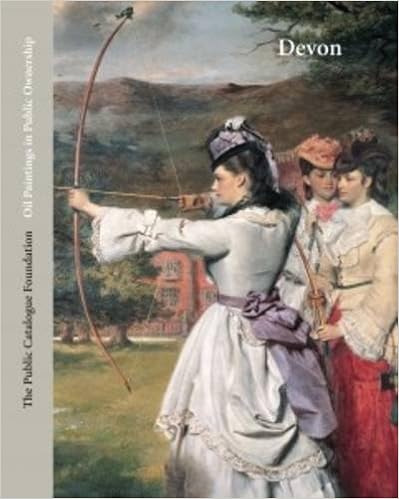
The entry for Tiverton in Oil Paintings in Public Ownership – Devon (The Public Catalogue Foundation), coordinator Caroline Nicholson, 2012, includes a short article by John Vanderwolfe and illustrations of pictures in Tiverton Town Hall, the Mid Devon Museum and the Anglo-Polish Foundation.
The famous collection of oak trees at Chevithorne Barton is recorded in The Oaks of Chevithorne Barton (Adelphi) by Michael Heathcoat-Amory (2009).
Biographies of well-known Tivertonians include:
Edward Capern, the Postman Poet (Vanguard Press) by Ilfra Goldberg (2009), Lord Palmerston (Constable) by Jasper Ridley (1970), Hannah Cowley: Tiverton’s Playwright and Pioneer Feminist 1743-1809 (Devon Books) by Mary de la Mahotiere (1997), The Life And Achievements of Sir John Popham, 1531–1607 by Douglas Walthew Rice (2005) Richard Cosway (Unicorn Press) by Stephen Lloyd (2005), John Heathcoat, 1783-1861 : Founder of the Machine-Made Lace Industry (David and Charles) by D. E. Varley (1969), John Heathcoat and His Heritage (Johnson) by W.Gore Allen (1958), The Journal of John Gabriel Stedman soldier and author (London, The Mitre Press, 1962), and John Gabriel Stedman: A Study of his Life and Times (Thompson and Company, 1966), both edited by Stanbury Thompson, include descriptions of the author’s life in Tiverton. To War with the Walkers. Three Soldiers, the War Bride, the Nurse and a Doctor. One Family’s Extraordinary Story of Survival in the Second World War (Hodder) by Annabel Venning (2019), recounts the story of a Tiverton family in WW2.
 ,
,
Joyce Wethered. The Great Lady of Golf (Tempus) by Basil Ashton Tinkler (2004) and The Reluctant Politician: Derick Heathcoat Amory (Christopher Johnson) by W.Gore Allen (1955).
The Poems of Edward Capern (Letterbox Books) by Liz Shakespeare was published on March 27th 2017.
The Narrative of a Five Year’s Expedition to Surinam by John Gabriel Stedman, 1813 edition, is available online.
The Battle of Dorking, the influential 1871 short story by Sir George Tomkyns Chesney, is also available online. (1914 edition).
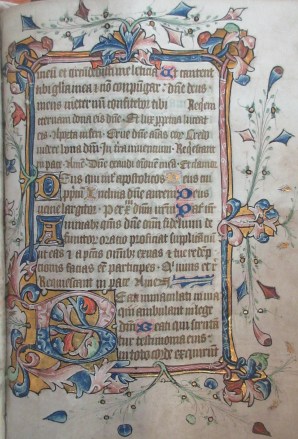
A History of the Church of St Peter, Tiverton (Tiverton: Gregory & Son) by Edwin S. Chalk ( 1905) is a detailed history of the church.
Devon, its Moorlands, Streams and Coasts (Chatto and Windus) by Lady Rosalind Northcote (1908) can be read online. It includes an extensive chapter on Tiverton and the Exe Valley.
Britain From Above has many detailed aerial views of Tiverton, many taken before the Second World War. Historic England holds an extensive archive of historic photographs of Tiverton, divided into two groups Churches and Castle and Other Places. A 2009 You Tube video compares past and current views of Tiverton
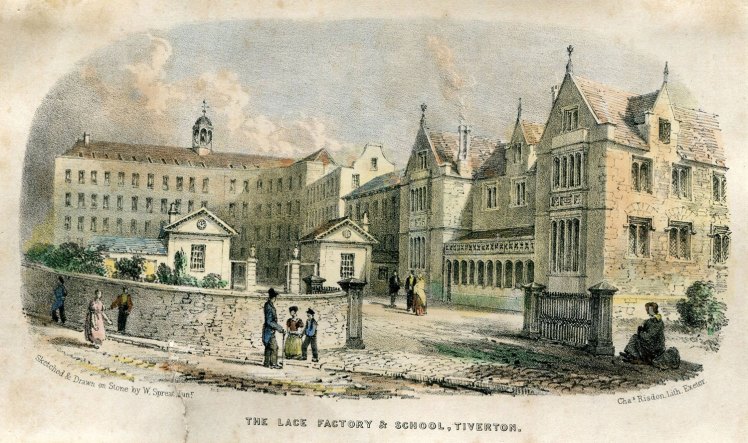
The print below, of John Heathcoat’s Lace Factory, dates from about 1860.

The Huntley Film Archive includes many short films of Tiverton, many over one hundred years old.
.
 Tiverton Civic Society