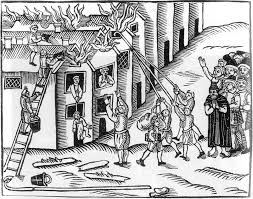
Large numbers of Tiverton’s buildings were destroyed in a series of disastrous fires, culminating in the Great Fire of 1731.
Nevertheless, the town still has many Listed Buildings of Historic or Architectural Interest, as do outlying areas of the civil parish which were unaffected by these fires.(What does the listing of buildings mean?).
This Page is also being extended to include Grade 1 and Grade II* buildings close to Tiverton in nearby parishes, including Bickleigh, Cadeleigh, Halberton and Washfield.
Some of these listed buildings are illustrated on this page and many more in ‘Our Gallery’ at the foot of each page in this website. The on line description of the Tiverton Conservation Area, contains much useful and interesting information and includes many photographs. However, Historic England categorizes the Tiverton Conservation Area as ‘Heritage at Risk’, its condition being ‘very bad’ and ‘deteriorating’. (It is one of only 6.1% of England’s Conservation Areas classified in the Heritage at Risk category, others in Mid Devon including Cullompton and Bow, which are also both classified as ‘very bad’).
Scheduled Ancient Monuments
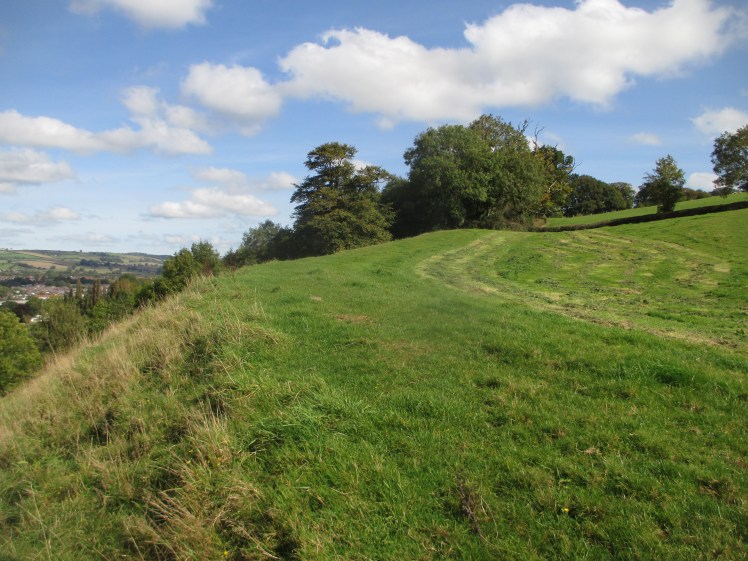
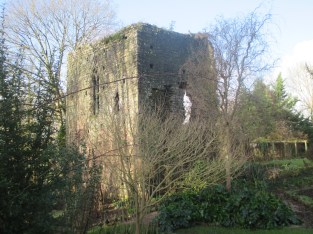
In addition, the civil parish of Tiverton also includes several notable Scheduled Ancient Monuments of considerable archaeological interest. These include Tiverton Roman Fort near Bolham; the uninhabited ruins at Tiverton Castle ; Cranmore Castle, an important Iron-Age earthwork which dominates the hill to the south of the town centre and is the largest enclosure in Devon; Huntsham Castle, an Iron Age hill fort in the north-east corner of the civil parish of Tiverton (Access); and, just outside the parish, Castle Close, a circular Iron Age enclosure or hill fort east of Stoodleigh;
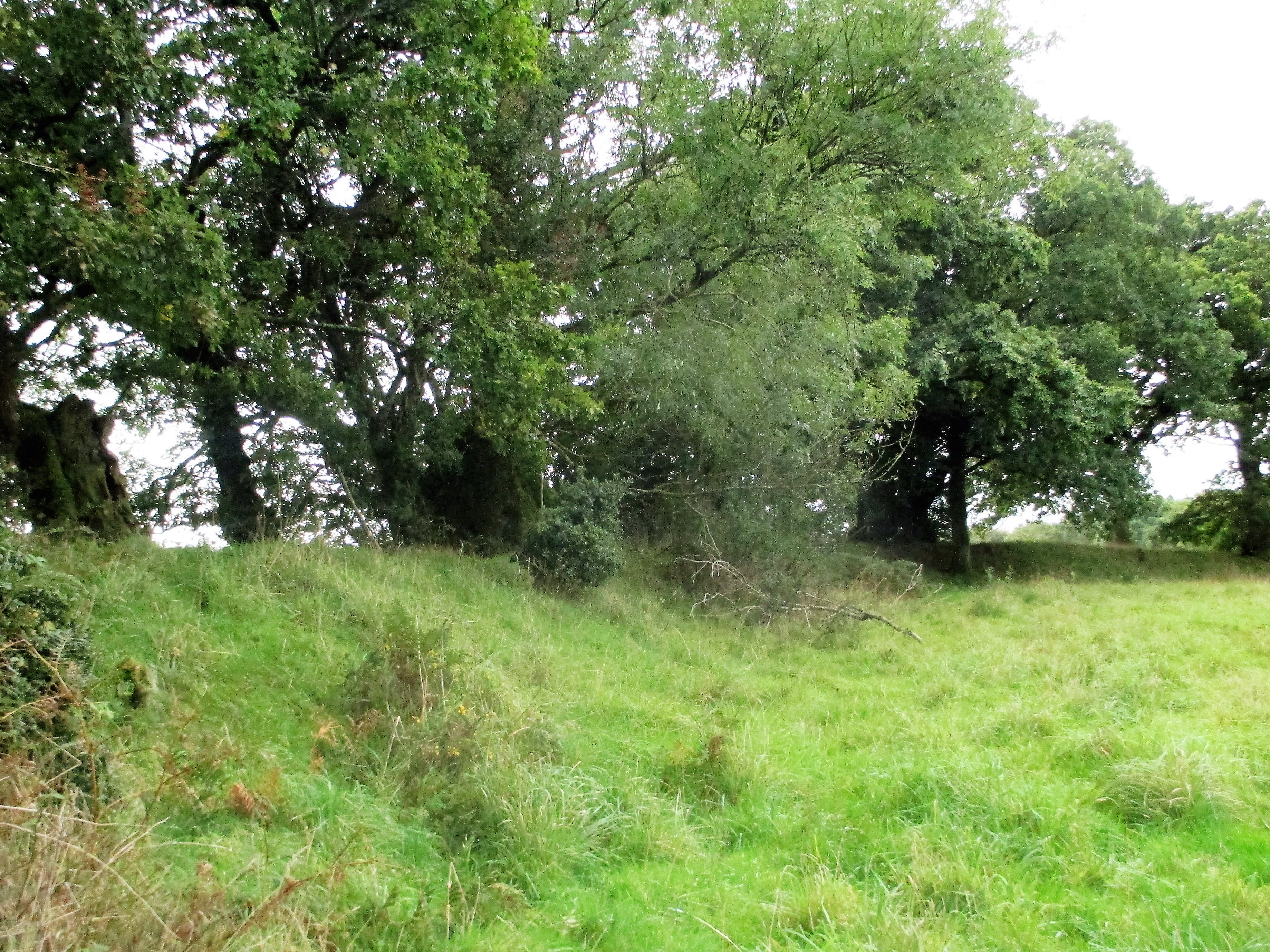
the late Neolithic/Bronze Age Bowl Barrow near Craze Lowman, which is included in Historic England’s Heritage at Risk Register; and the Long Barrow, off Uplowman Road, which is almost certainly Neolithic in date. See Full Report, 2012, of excavation by Cotswold Archaeology. This has a massive surrounding ditch and is a type of monument not previously recorded in Devon. Although not scheduled as an ancient monument the discovery and excavation in 2018 of a Late Iron Age/Early Roman Funerary Monument north of Uplowman Road, Tiverton, by Cotswold Archaeology confirms this area’s archaeological importance. See below and..https://cotswoldarchaeology.co.uk/a-late-iron-age-early-roman-funerary-monument-in-tiverton-devon
(More on Prehistoric Barrows and Burial Mounds and on Hill Forts ,The Short article on Roman and pre Roman Halberton, publihed by the Halberton History society is a useful guide, which refers to examples in the Tiverton area.)
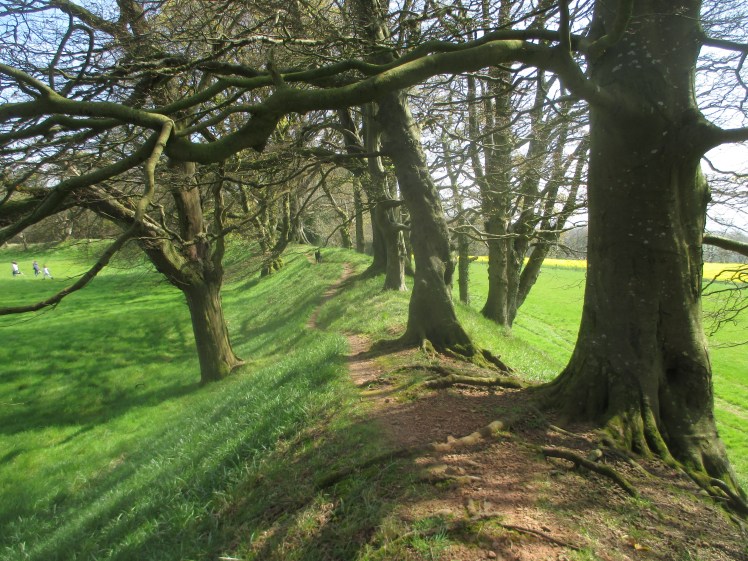
Note: Cadbury Castle, a fine Iron Age hill fort with panoramic views, off the Bickleigh – Crediton road, is just outside the civil parish of Tiverton. Historic England have recently enhanced its appearance and access, providing four interesting information boards in 2016, partly funded by Mid Devon District Council, which give invaluable information about this and other similar hill forts in the area. A lay-by and the path to the hillfort are about 0.5 km beyond the church on the minor road to Thorverton. Also outside the parish of Tiverton, the Halberton Roman Villa is a recent discovery which is currently being excavated. More detail, as well as information about other locations, can be read on the Megalithic Portal: https://www.megalithic.co.uk/article.php?sid=63398
Buildings which are Listed Grade I
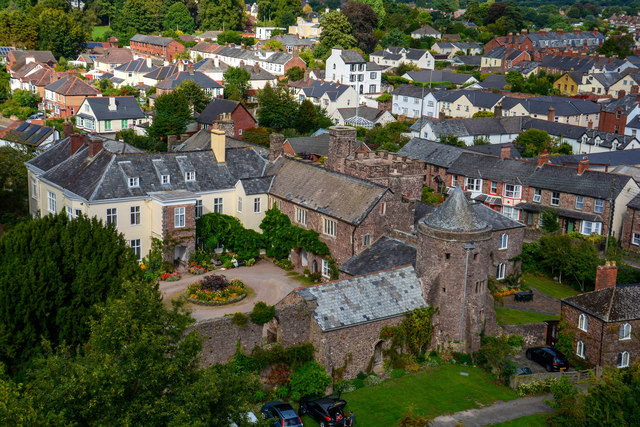
Tiverton Castle which is shown in the photograph below, taken from St Peter’s Church tower by Lewis Clarke. The uninhabited ruins are also listed as a Scheduled Ancient Monument. Open to the public. Also see Wikipedia. and Heritage Gateway.
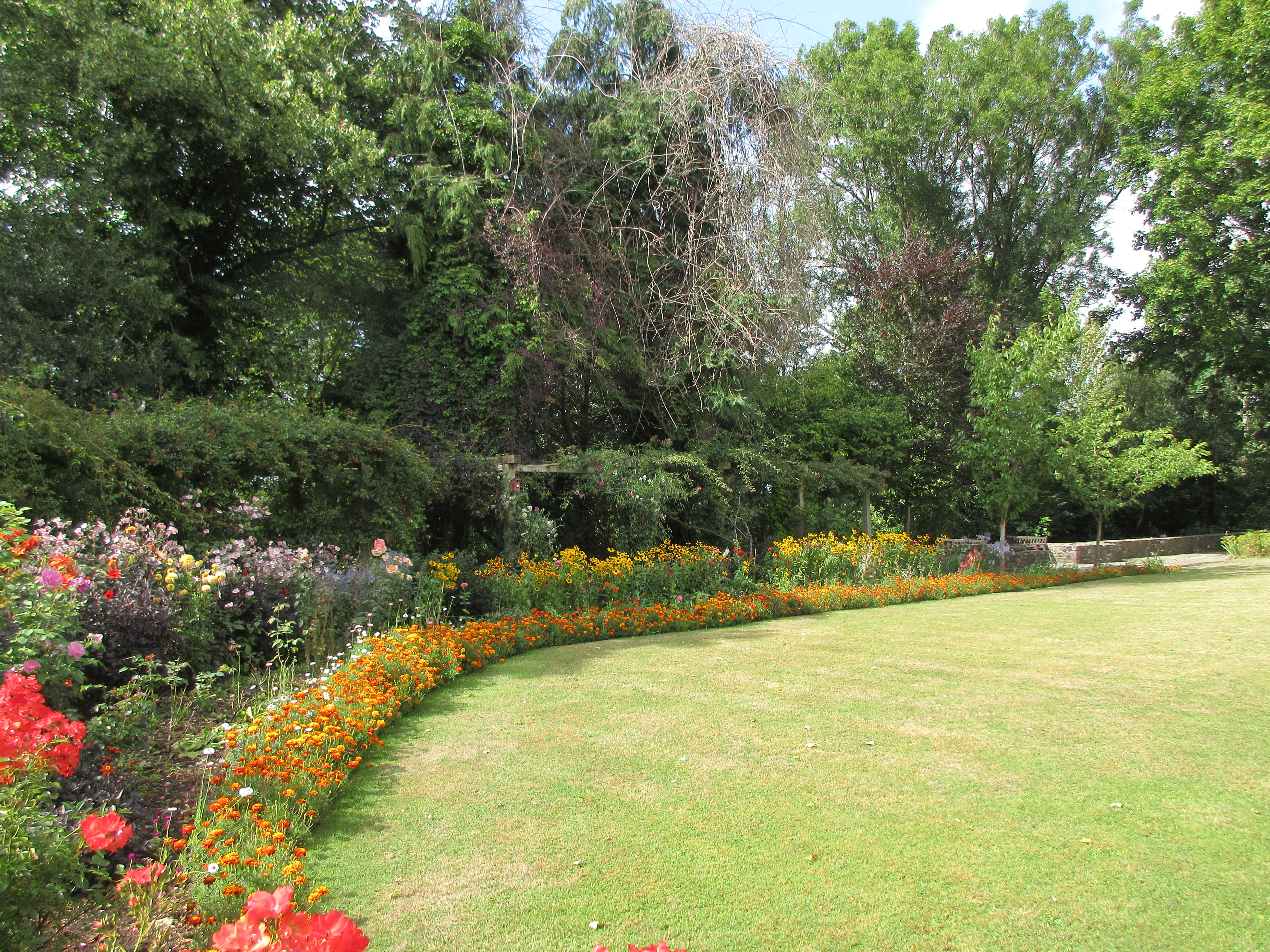
Old Blundell’s, Station Road, built 1604. Owned by the National Trust. House not open to the public but open space of the front ‘quad’ can be viewed. Also see pages 5-12 of the Devon Buildings Group Newsletter, 1988.
St Peter’s Church, St Peter Street, with outstanding Greenway Chapel and porch 1517: ‘a gorgeously ostentatious display of civic pride’ (Pevsner). See more at: Heritage Gateway which provides a very detailed description of the architecture and a comprehensive bibliography relating to the church; and Britain Express.See also pages 26-29 of the Devon Buildings Group Newsletter 34 (2016)http://www.devonbuildingsgroup.org.uk/uploads/NEWSLETTER%2034.pdf
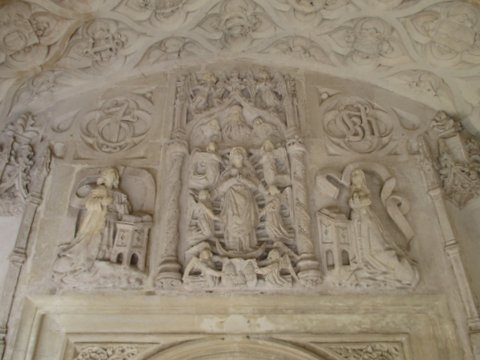
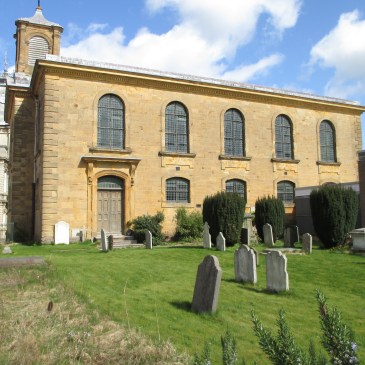
St George’s Church, Fore Street, designed by John James, a pupil of Wren, built 1714-1733, and described by Cherry and Pevsner as ‘Devon’s best 18th century town church’. It is little used and some concerns have been expressed about its future.
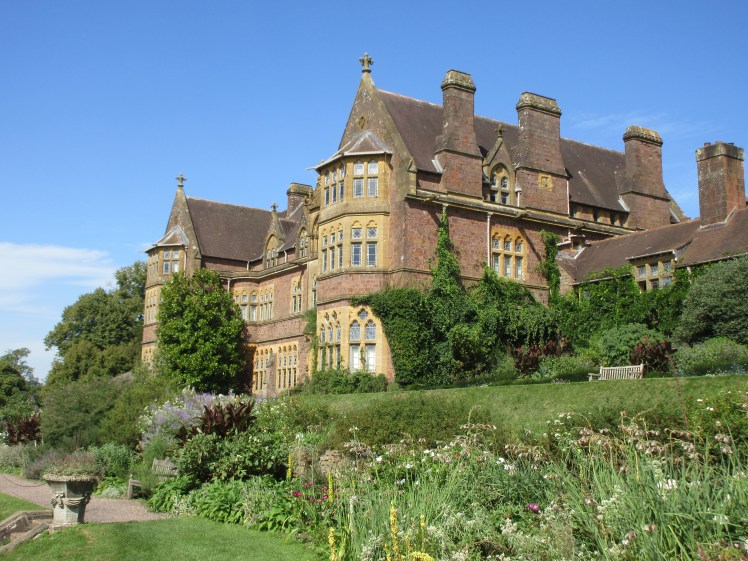
Knightshayes Court 1869-74, built for Sir John Heathcoat-Amory, grandson of John Heathcoat, and designed by William Burges. See also.Interior mainly by John Dibblee Crace. A detailed ‘Historic Landscape Assessment’ of the Knightshayes Estate can be read online. (William Burges also designed the Grade II Old Rectory at Chevithorne)
The park and gardens at Knightshayes are listed Grade II*by Historic England.
Knightshayes Court
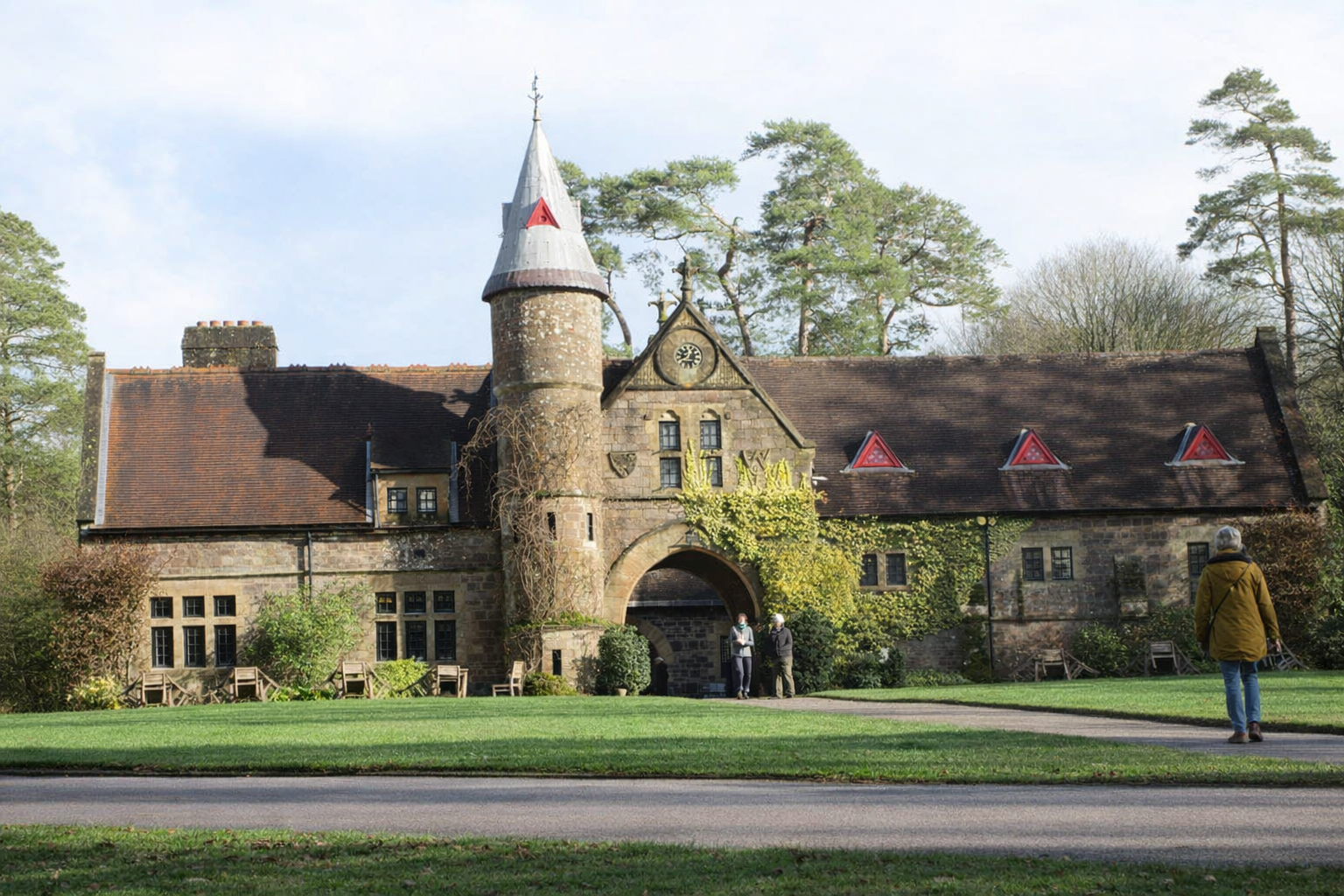
The Stables at Knightshayes Court. A typically ‘Burgesian’ Gothic Revival building with a conical French tower (‘Witch’s Hat’), finials, heraldic shields, arches etc
(An illustrated guide to all Devon’s Grade I and Grade II* buildings can be viewed online)
Buildings which are Listed Grade II*
Amory House, 11 St Peter Street, 1708. It was announced in December 2018 that this important Queen Anne house will be sold.
Chilcot School 1611, including the Master’s House, 4 St Peter Street, at rear (visible from Exe Bridge). St Peter Street.
The Great House of St George, St Peter Street, completed 1614.
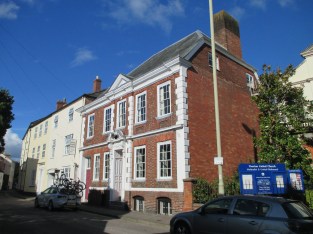
‘The Great House of St George is a good example of an early 17th century town house in a provincial market town, built by an important local merchant and philanthropist’ (Historic England). It is of especial importance as the only surviving house in the town erected by one of the wealthy merchants who ran Tiverton in the 17th century and who are known from charitable buildings they founded.
Waldron’s Almshouses and Chapel, Wellbrook St, Westexe, 1579. For listing entry see.
Chevithorne Barton, early 17th century manor house. The former home of Viscount Amory of Tiverton and well-known for the world-renowned collection of oak trees, ‘the largest and most comprehensive in Britain and almost certainly in the world’, built up from 1984 by Michael Heathcoat-Amory.
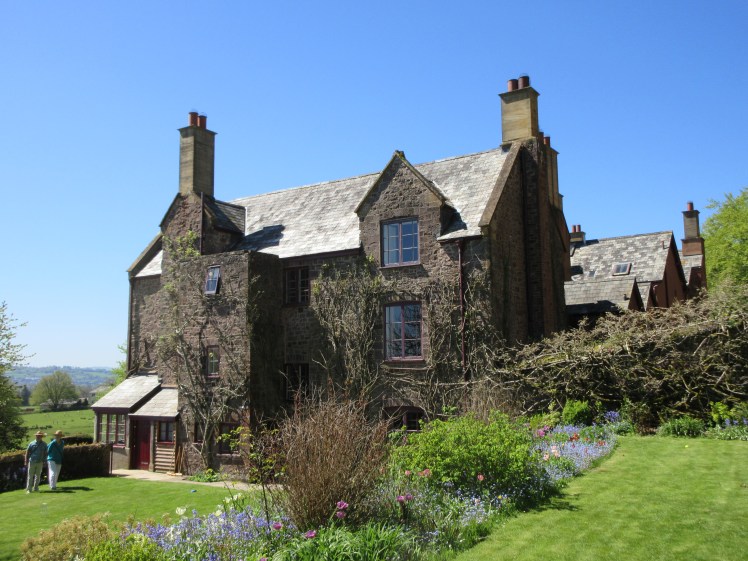
East Barton Old Farmhouse and integral barn, 16th century, extended in 17th century. ‘This is a very rare and probably unique building in Devon, being an evolved form of the longhouse and
incorporating not just a shippon but a barn, all under one
roof’ (British Listed Buildings).
Gotham Farmhouse. ‘A well-preserved building which retains clear indications of its
historic development and demonstrates the vernacular traditions of the area in much of its built form’
(Historic England). Upgraded to Grade II* in 2015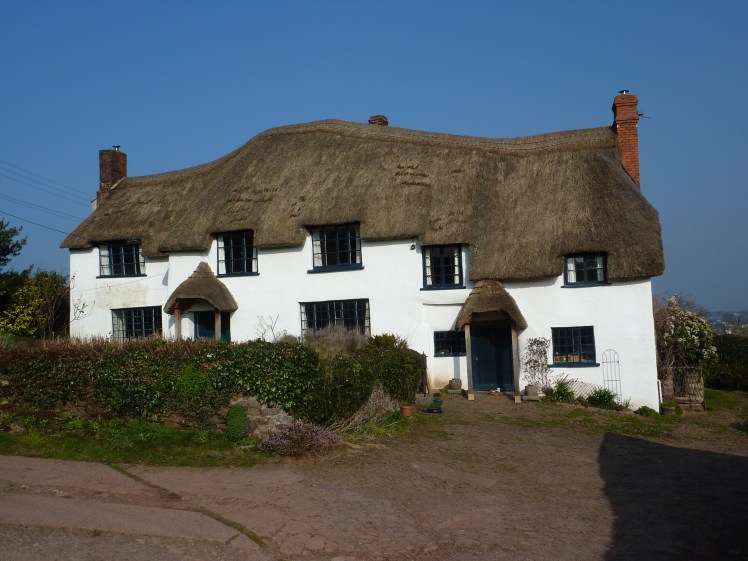
Gotham House, off Phoenix Lane,.See Also the Wikipedia entry for this fine building. and the photograph at the bottom of this page.
Built in 1739, following the disastrous fire of 1731, a rare example of an elaborate Georgian townhouse,
The Gardens and Park at Knightshayes Court are listed Grade II* in Historic England’s Register of Historic Parks and Gardens.
Buildings which are Listed Grade II
There are 278 Grade II Listed buildings and other structures in Tiverton,
many important for their group value, often in pairs or terraces, an example of the latter being St Paul’s Street. Details for a selection of buildings and structures in this category in this category are shown below.
Please see the War Memorials Page for the War Memorial Hall.
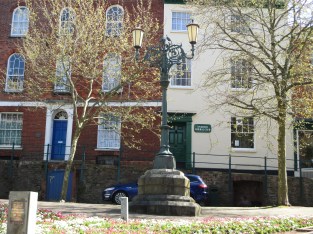
The 1878 Lamp Standard on Angel Hill (Grade II). The campaign to preserve this by Sir John Amory, Colonel William Amory and others in 1968 was one of the main reasons why Tiverton Civic Society was established in that year.
The former United Reform Church, St Peter Street (Grade II) is the subject of an excellent report by Richard Parker, Exeter.richardp2015bThis well illustrated report includes the history of the Steps Meeting House (1660-1831), which formerly stood on this site.
23A, 23B and 23C Fore Street (Grade II). Late 17th century or earlier, but drastically altered, ‘this appears to be a rare example in Tiverton of a timber-framed, jettied, urban building.’ (Historic England).
Old Police and Fire Station,(1846), now Bridewell House, in St Andrew Street (Grade II).
In our early years Tiverton Civic Society campaigned vigorously for the preservation of this threatened listed building and it was restored by the Devon Historic Buildings Trust in 1978. This building was one of many designed by Tiverton architect and surveyor Gideon Acland Boyce (1797 – 1861) whose practice was in Gold Street. His other Grade II listed buildings include the Heathcoat Factory School (1841), the Mortuary Chapel (1855) in Tiverton cemetery, the former Roman Catholic Church and Presbytery (Sion House) (1836), and the former St Peter’s Church House and Bluecoat School (1842). He was also responsible for restoration at St Peter’s Church in 1825-1829, especially the south chapel, and was Clerk of Works for the building of St Paul’s Church.
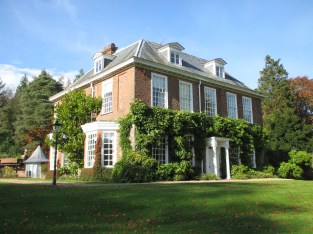
Raymond Penny House, Phoenix Lane (Grade II). Tiverton Civic Society, together with many other organizations and individuals,successfully campaigned for the conservation of this listed building which was threatened with demolition by MDDC.
The Grade II former Workhouse at Gilbert Scott Way was designed by Sir George Gilbert Scott.
Hensleigh House (Grade II) was the home of John Gabriel Stedman and the birthplace of Everard Radcliffe, former Captain of Yorkshire County Cricket Club.
Newplace (Grade II) in Seven Crosses Road dates from the 1770s, and incorporates more recent changes.The frontage has similarities to that of Alexandra Lodge.
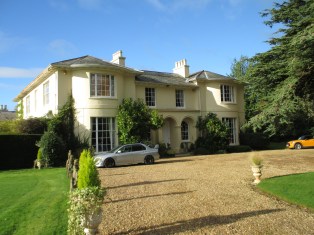
Bolham House (Grade II) was built in the 18th century and extensively remodelled in the early 19th century. It was the home of the Heathcoat-Amory family before Knightshayes was built and John Heathcoat died here in 1861. In the 16th century the original house on the site was owned by the family of Sir Walter Raleigh.See also https://www.countrylife.co.uk/property/a-georgian-country-house-full-of-period-features-set-in-grounds-that-are-a-true-haven-for-wildlife-225673
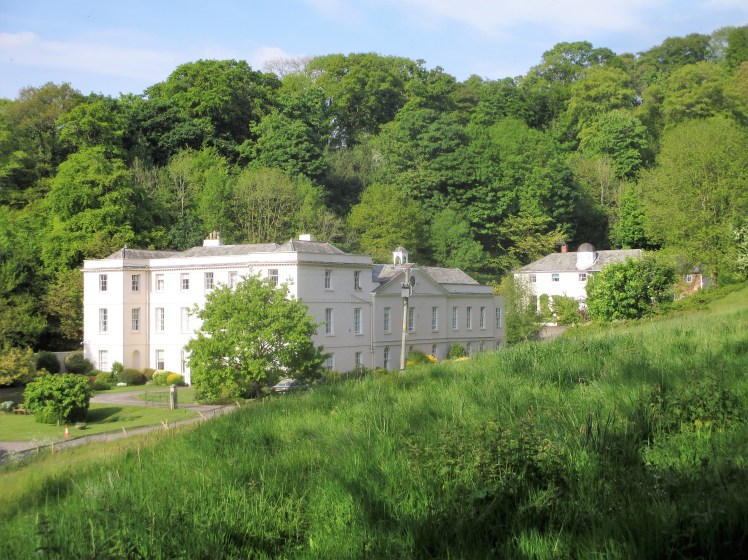
Collipriest House (c1778) (Grade II). Large country house with strong historical links to the Carew and Blundell families.
Howden Court, formerly St Aubyn’s School. (Grade II)
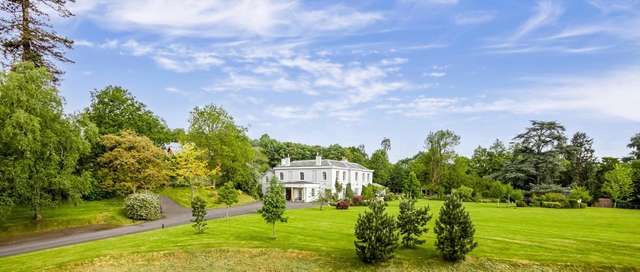
A small late 18th century country house with later additions.
Ashley Court (Grade II).
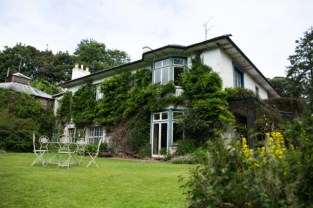
A very attractive small country house and estate of considerable importance in Tiverton’s history.
Early C19, possibly incorporating remains of a 1657 house built by John Upcott, a Tiverton wool merchant. Fine interiors with many original features and a large walled garden. The current owners are beginning an extensive restoration.
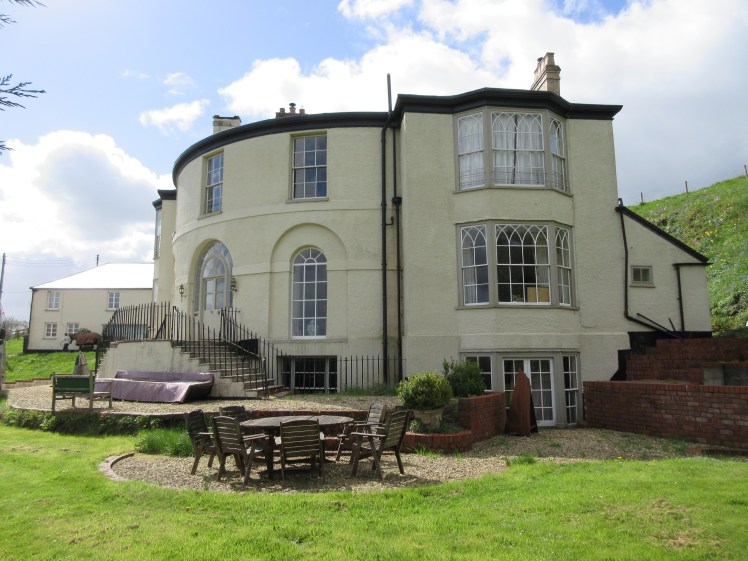
Ashley House (Grade II). Built for Nicholas Dennys, Tiverton cloth merchant and father of the naval officer Lardner Dennys, in 1794. Many interesting design features and original fittings. Original railings.
The Museum. St Andrew Street. (Grade II). A fine example of an early Victorian National School. 1844.
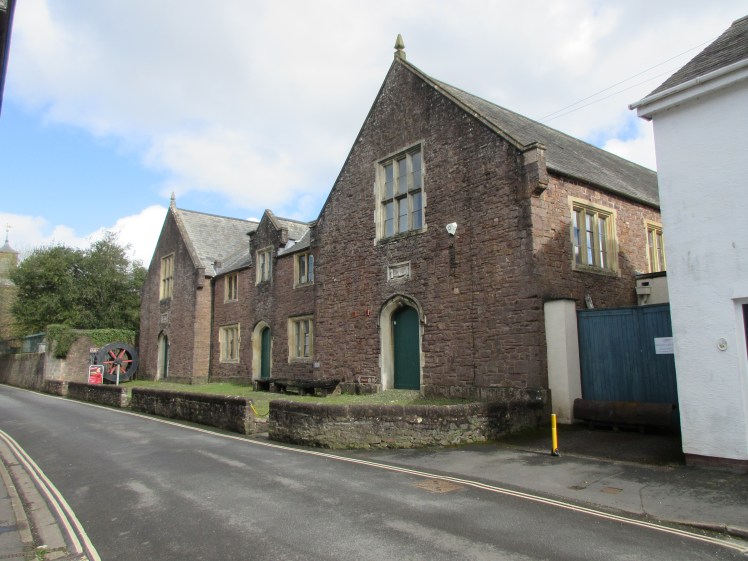
The Museum
The Museum’s Conservation Management Plan 2024 may be read online.
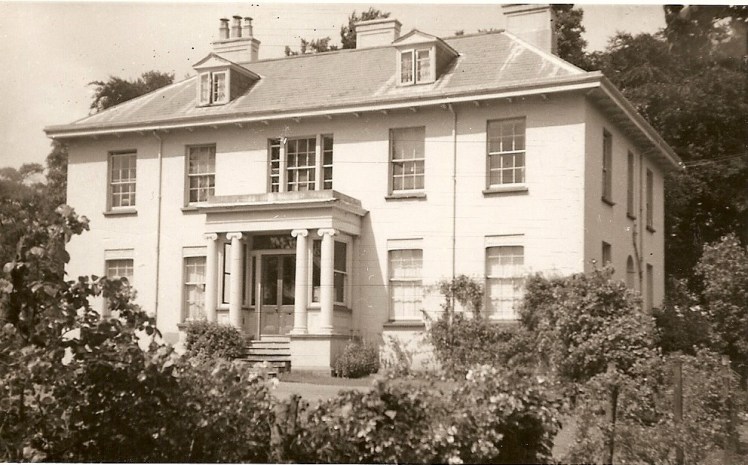
Exeleigh House (Grade II) was built by John Heathcoat in 1820 and it was the home of his daughter, Caroline Brewin, and her husband, Amrose .‘It is a good example of a Georgian villa, with some unusual features (the cast-iron columns to the porch), but also historically important as Heathcoat’s house,
![Exeleigh [571500]](https://tivertoncivicsoc.org.uk/wp-content/uploads/2015/11/exeleigh-571500.jpg?w=257&h=152)
The good news is that, early in 2019, work was instigated to restore the exterior of the building.
The building is shown on an 1928 aerial photograph which also features St Peter’s Church. The view below, from St Peter’s tower, was taken by Lewis Clarke.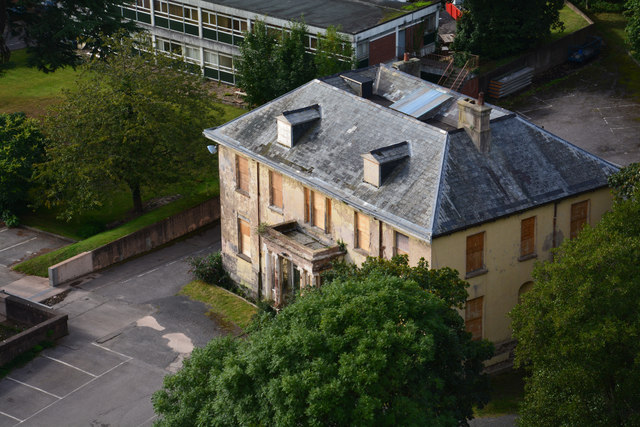 .
.
Church of St Thomas, Chevithorne, (Grade II.). 1843, Designed by Benjamin Ferrey, a well-known Gothic Revival architect who was a childhood friend, pupil and biographer of A W N Pugin. (Below)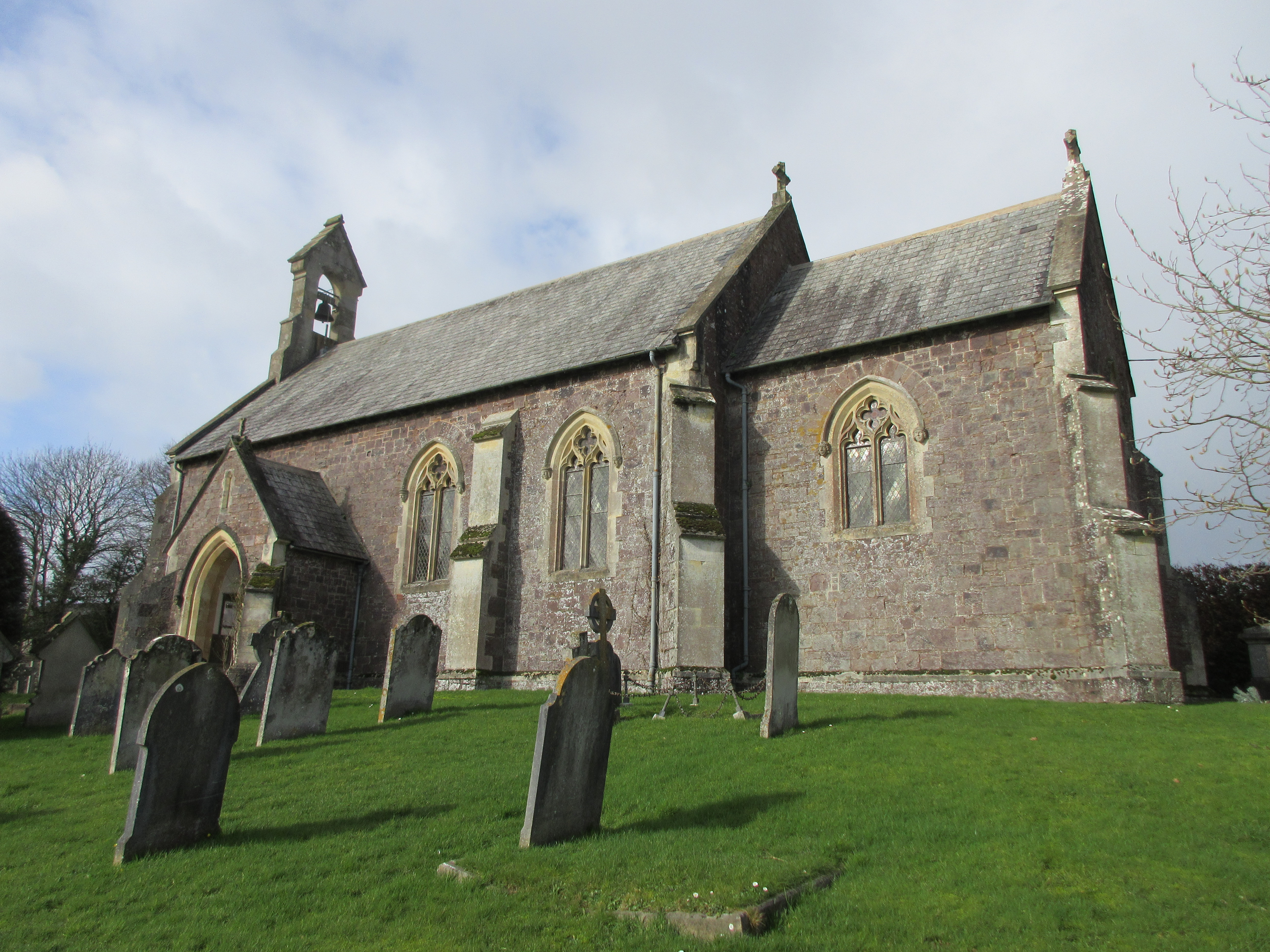
Berry (Grade II), Chevithorne, which has important links to the Waldron and Heathcoat-Amory families. ‘Berry has an unassuming exterior but retains a rare and important interior of considerable interest.’ (Historic England).
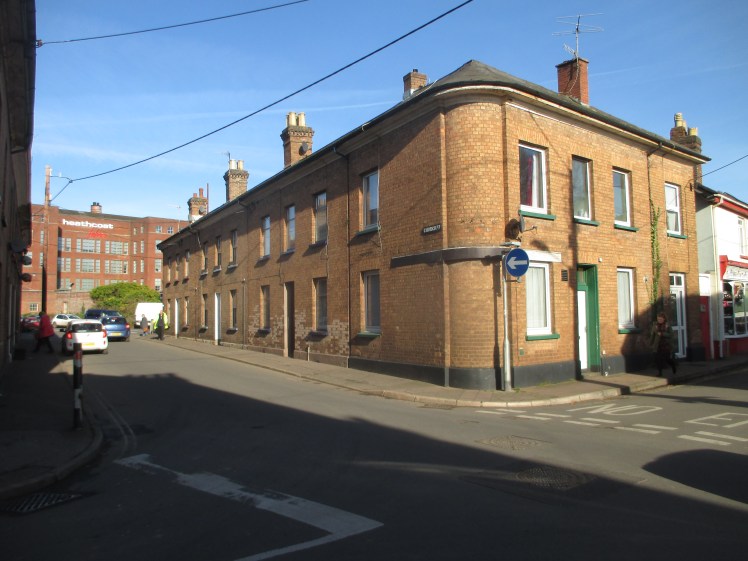
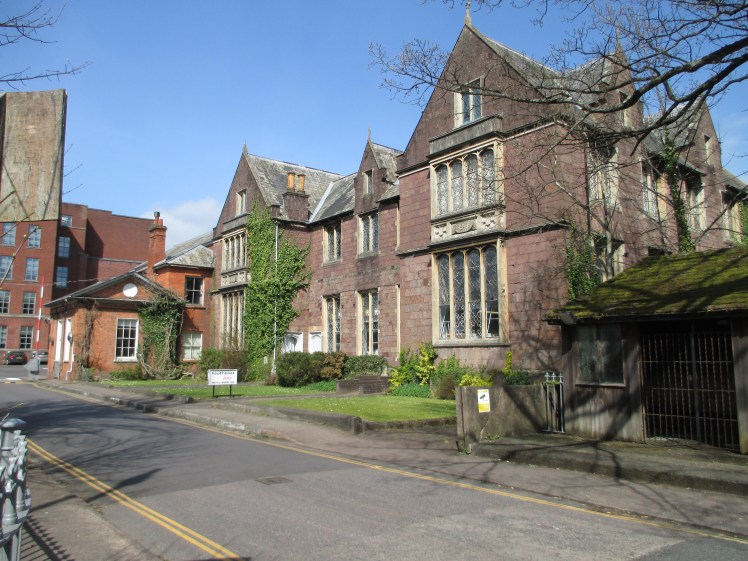
John Heathcoat and his descendants developed a nationally important planned residential area in West Exe, primarily built for up to 2000 workers in the family’s silk and lace mills.
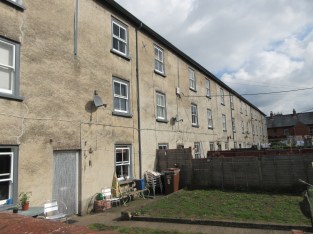
These include 12-22 and 26 Church Street (Grade II), of interest for their external completeness as part of a planned group, including Anglican Church, institute, corner shops and school. Other examples include 1-14 Heathcoat Square (Grade II), ‘a very significant survival of industrial housing of this type’ Historic England and Elm Terrace, 1 – 11 Leat Street. (Grade II). ‘Heathcoat’s housing programme in the West Exe area was remarkable in national terms’ (Historic England). See also Heathcoat School (Grade II).This was Devon’s first factory school (1841) and is ‘of outstanding historical importance as an example of a building of this type’ (Historic England); St Paul’s Church, (Grade II) and Heathcoat Hall (Grade II). 1-4 Bridge Buildings (Grade II) is an attractive early to mid 19th century terrace of four substantial houses close to the Heathcoat factory entrance. The neglect and poor condition of No 3 has, for some years, been of local considerable concern, and, despite the issue of an Enforcement Order by MDDC in 2016, much restoration remains to be carried out. (Please see the photograph at the bottom of this page).
Clare House (1816) (Grade II). Probably built on the site of a former parsonage
Behind the impressive Thorverton Stone doorway and the unimpressive exterior lie the substantial remains of John Upcott’s great house of the mid 17th century. The frontagse of this and many other houses in Bampton Street were removed in a 19th century street widening scheme. (The Historic England entry for this building needs to be updated).
Alexandra Lodge, formerly Zephyr Lodge and The Lodge (Grade II) has strong historical links to the Blundell and Heathcoat-Amory families. ‘It was acquired for redevelopment in 2016 but the project was put on hold. Since that time the building has suffered significant decay and is now in danger of collapse. This is largely the result of water ingress following the theft of leadwork from the roof in 2020’. (See Heritage Gateway). Empty and unused
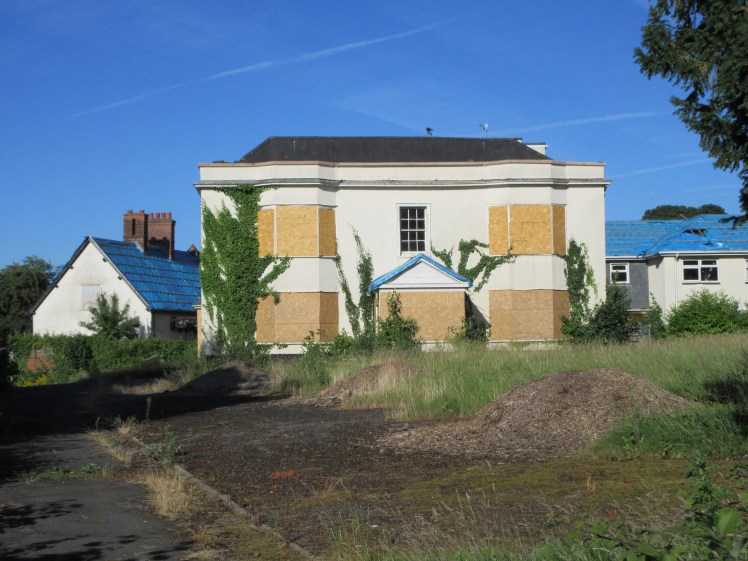
Warnicombe House (Grade II). An attractive early 19th century house with fine south facing views. The main house was built for John Weech of Tiverton, who died before it was completed in 1808.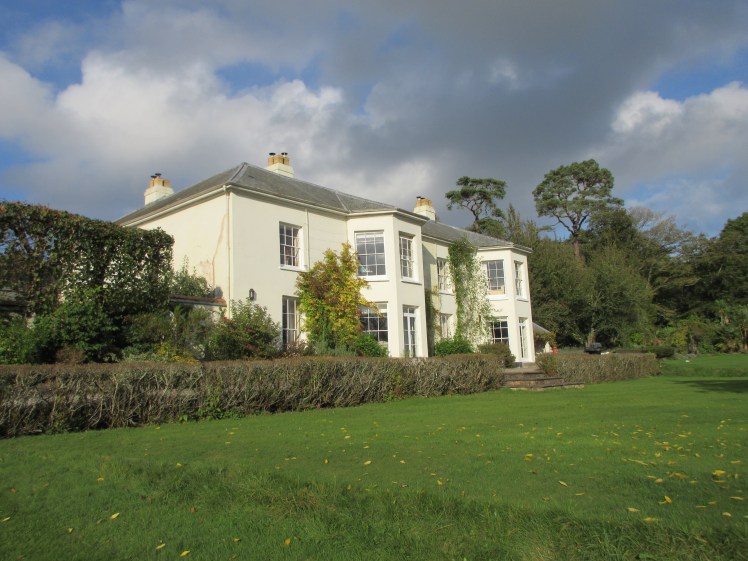
Broomhill House. (Grade II). An attractive late Georgian/Regency House, which was built for Thomas Combe in about 1830. ‘The beautiful family house contains many fine features typical of the era with ornate fireplaces, high ceilings with ceiling mouldings, internal and external window shutters, oak doors and floors, and a magnificent carved oak staircase rising up from the main reception hall.‘ (Devon Live)

Bickleigh Bridge (Grade II), half of which is in the civil parish of Tiverton, is ‘a fine road bridge with evidence of a long building history’.(Historic England).It was built in 1610-1630 and extensively restored in 1809.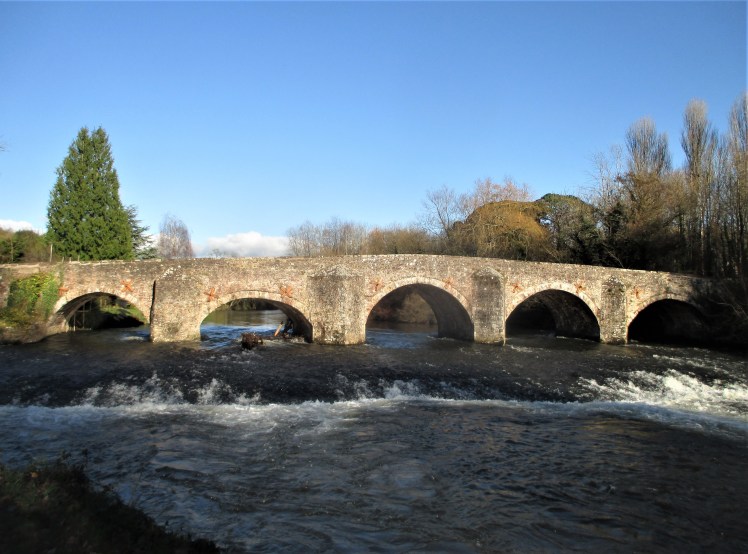
The elegant Cove Bridge of 1791 (Grade II) is also half in the civil parish of Tiverton.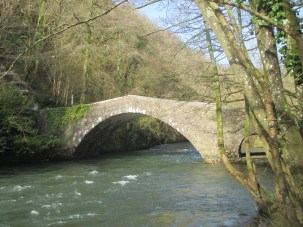
Tidcombe Lane and Manley Lane Railway Bridges (Grade II) are surviving examples of Brunel ‘Flying Arch’ Bridges.
Halberton Aqueduct , also by Brunel, is not yet listed, but along the Grand Western Canal, many structures, including bridges, lime kilns, culverts and a tunnel, are listed Grade II, nearly half of them of them outside the parish of Tiverton.
57 Bampton Street and 61/61A Bampton Street (both Grade II) are locally important 17th/18th century buildings with many period details. The latter, dating from about 1710, was built for the cloth merchant George Thorne, and it has a similar layout to Amory House. It has been restored following the issue of a repair notice by Mid Devon District Council in 2011.
The 1912 statue of King Edward V11 (Grade II), on Lowman Bridge, is by Harry Hems of Exeter.
17 Church Street, 1-17 St Paul’s Street, 1 West Exe North (Grade II). Erected by Caroline Brewin, John Heathcoat’s daughter.”A small middle-class enclave in the midst of an essentially working class district”. (Brayshay q.v.). See illustration on the Home Page.
Castle Lodge (Grade II). An attractive mid 19th century cottage with pointed Gothic windows at Tiverton Castle.
Little Tidcombe Farmhouse (Grade II), Warnicombe, and Pool Anthony Farmhouse (Grade II), West Manley Lane, are both 16th century farmhouses in Tiverton,
which have modest external appearances but internally retain outstanding features, including the
very high quality of the hall ceiling at Little Tidcombe, and fine screens and ceilings at Pool Anthony.
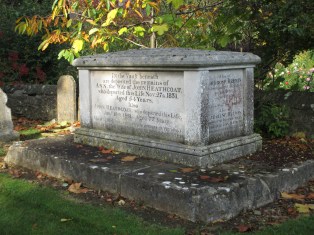
The Grade II churchyard monuments include the Heathcoat Tomb and the Dunsford Monument in St Peter’s Churchyard.
Grade 1 and 2* Buildings Closer than 10 km from Tiverton in Nearby Parishes. (Page Under Construction).
HALBERTON
St Andrew’s Church Halberton. (Grade 1). Although heavily restored by John Hayward in 1847/1848 the church contains many fine features from earlier periods, including the elaborately carved 14th/15th century pulpit and screen. For a detailed, illustrated, description, also see:
https://devonchurchland.co.uk/description/halberton-church-of-st-andrew-description/
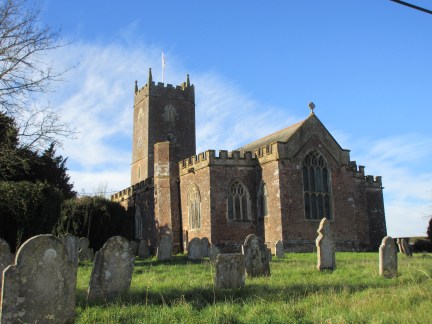
St Andrew;s Church, Halberton
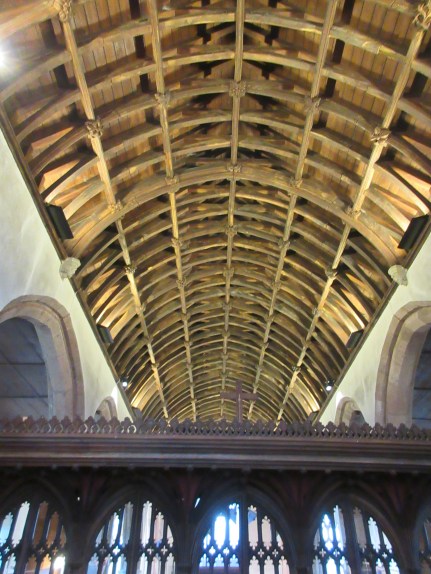
Ceiling and Upper Screen at St Andrew’s, Halberton
Moorstone Barton, (Brithem Bottom). Grade 1
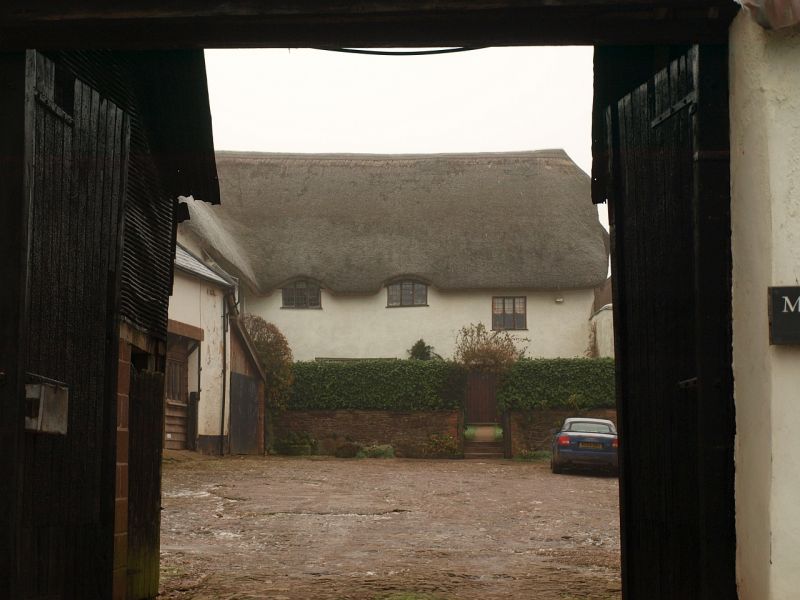
An exceptional survival. Current thinking is that the manor house was originally built by Thomas Gambon or Ganson (c. 1295–1360) and replaced a Saxon/Norman cob and timber building. The present main range was built by Walter Ganson in the 1340s, at the time of the Black Death, during the reign of Edward III, and it has many original features.
Unlisted Buildings.
Many buildings of considerable architectural value in Tiverton have yet to be listed, among them all those at Blundell’s School, including the main school buildings, chapel, Big School and dining hall, Ondaatje Hall and Beale Centre.
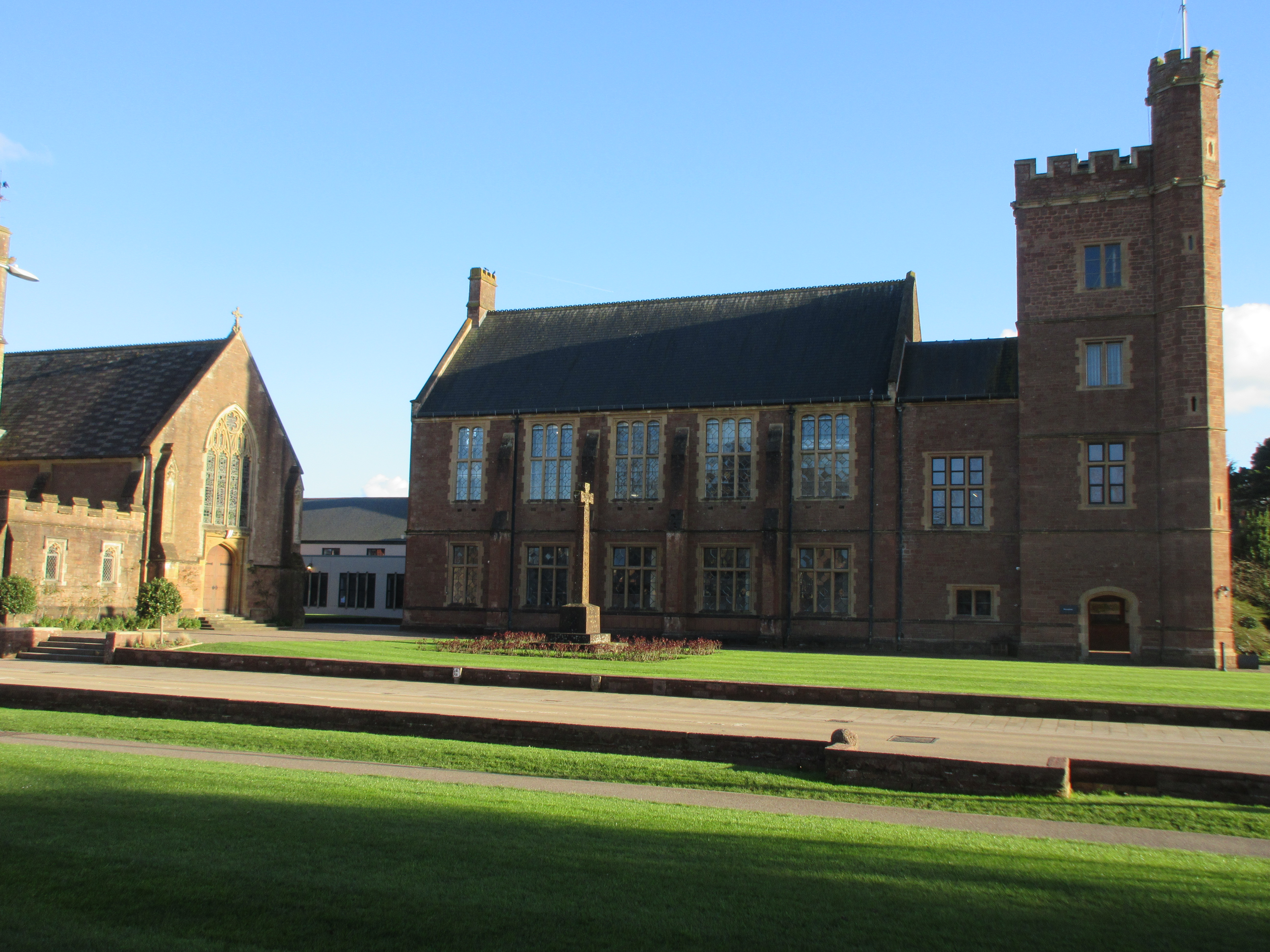
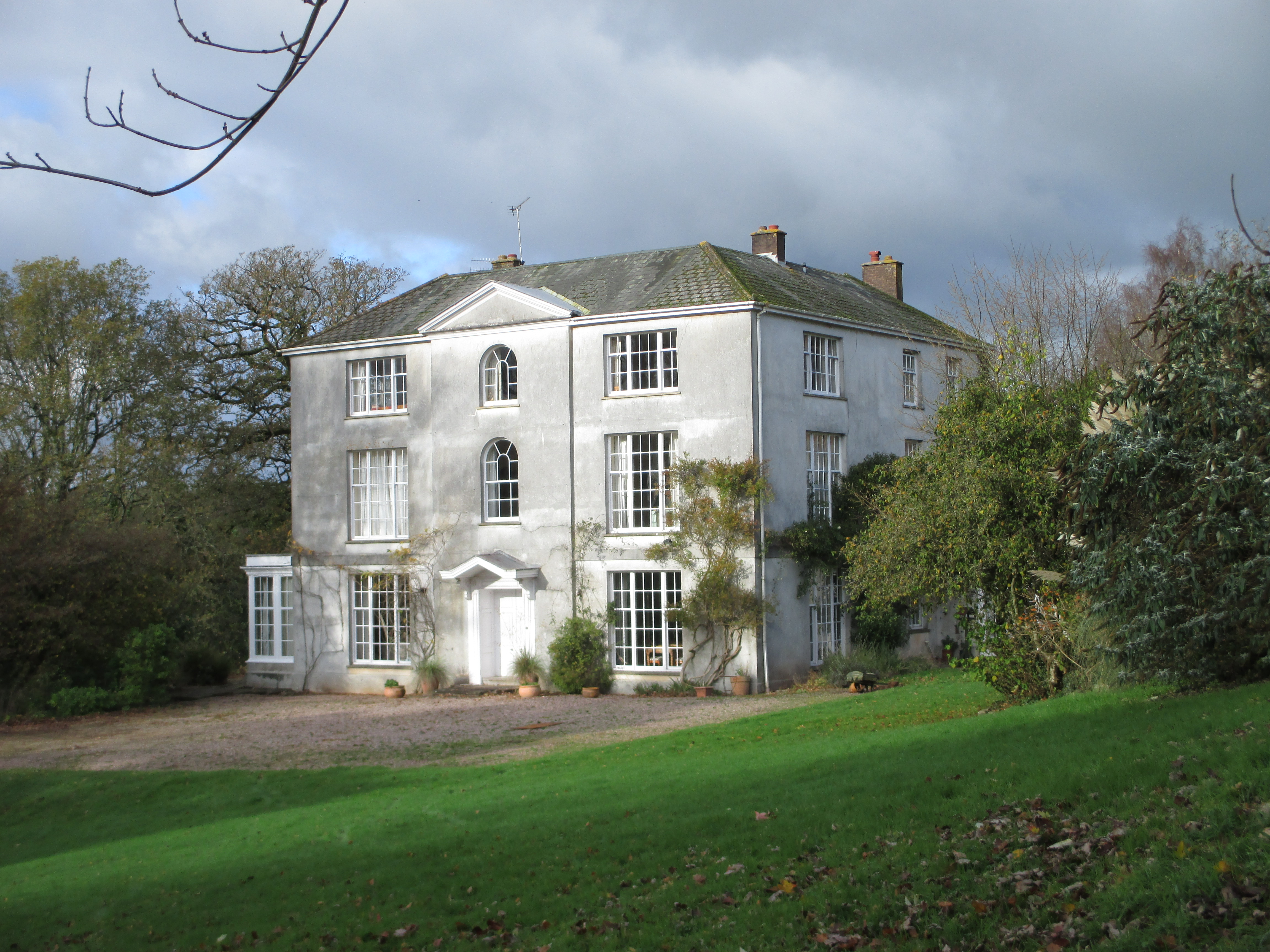
Hayne House, a substantial Late-Georgian house at Bolham, together with its dovecote and outbuildings, is not listed. The house and estate were acquired by Sir John Heathcoat-Amory in 1868, who, in 1867, had previously built for his own use the substantial unlisted house and adjacent cider barn at Lythecourt, Bolham. The Knightshayes Estate at Bolham and Chettiscombe also contains many other fine, unlisted, estate workers’ houses.
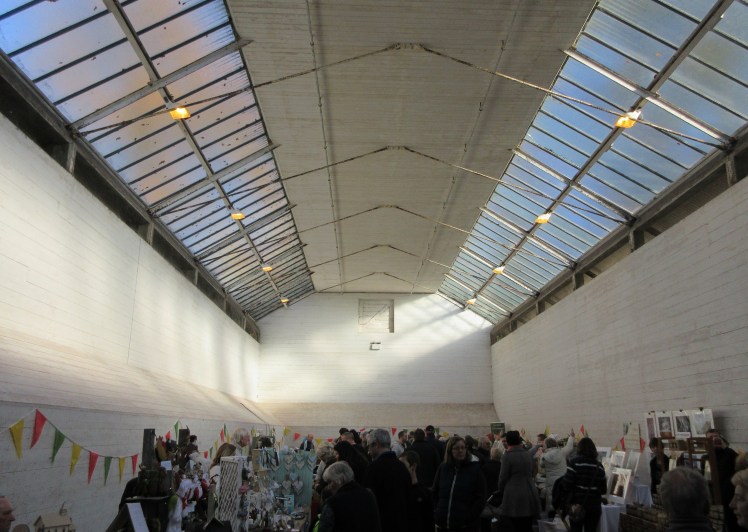
The Indoor Tennis Court at Knightshayes Court, built in 1907, is one of only two remaining examples in England of a Sticke tennis court.The only other surviving Sticke tennis court in England, at Hartham House, Wiltshire, is listed Grade II*, so surely the Knightshayes example should be listed? More information, including a video is also available.
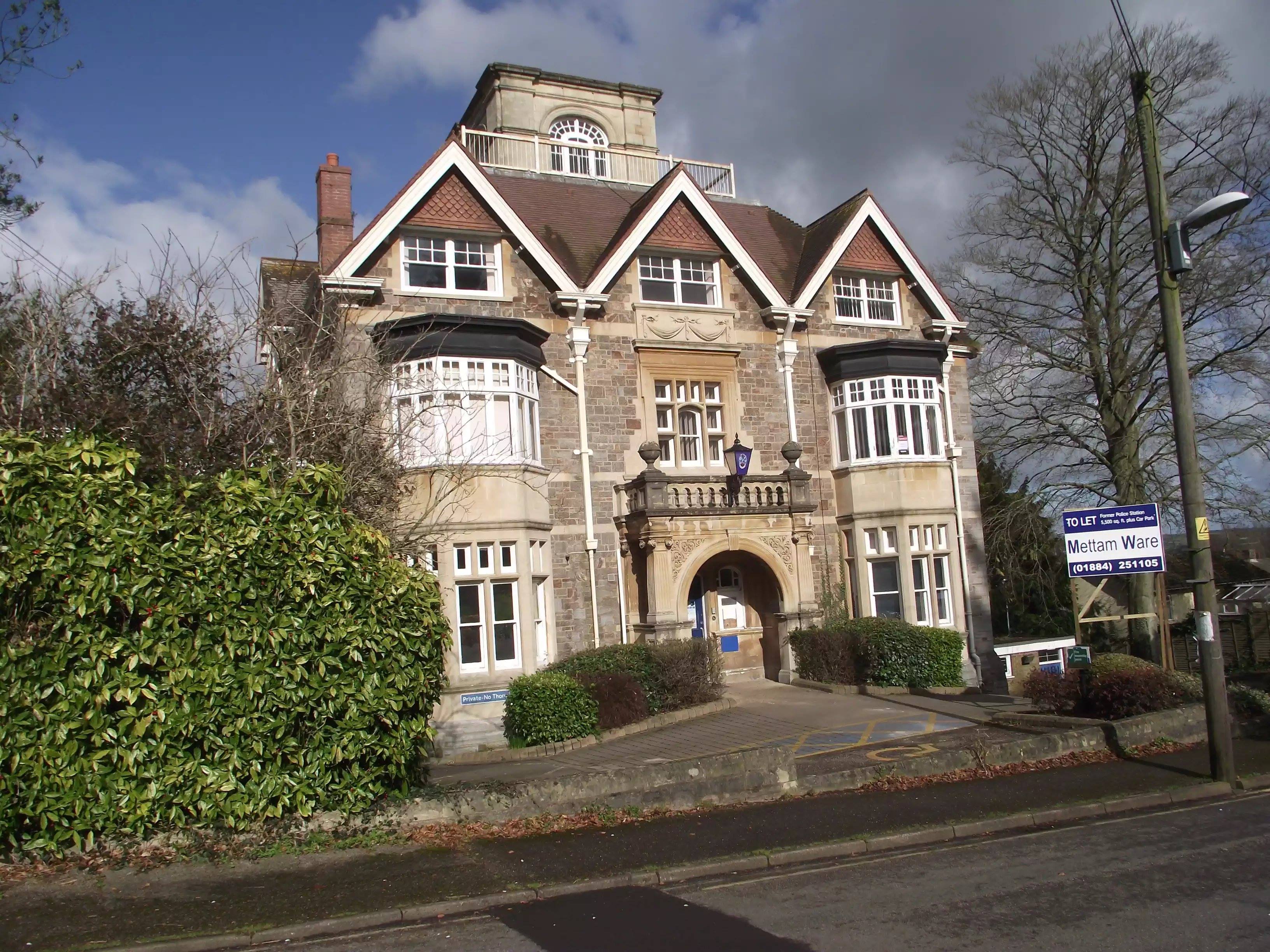
‘Beechwood’, the former Police Station in The Avenue. In a semi-derelict condition, and currently being restored.
Unlisted Parks
The People’s Park in Tiverton was created in 1887 to commemorate the Golden Jubilee of Queen Victoria’s accession in 1837. It is registered as a historic park by Parks and Gardens UK.
Please suggest any other buildings which you consider should be listed.
The main photograph shows St George’s Church.
Larger views may be obtained by clicking on some of these images.
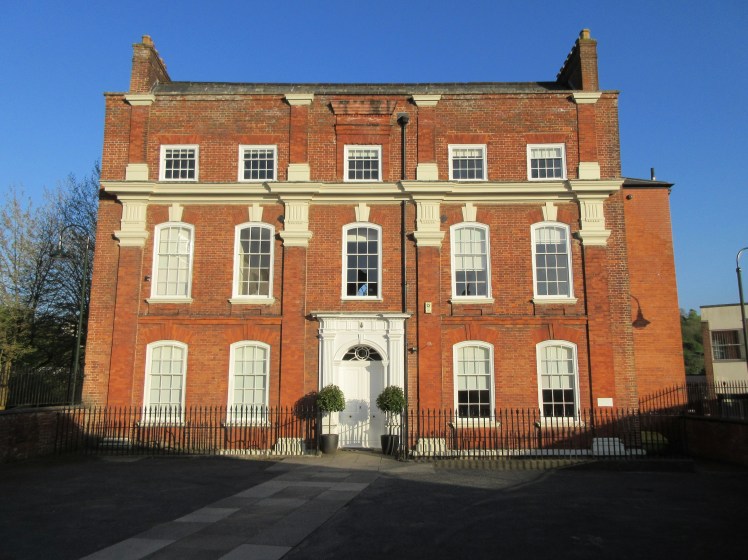
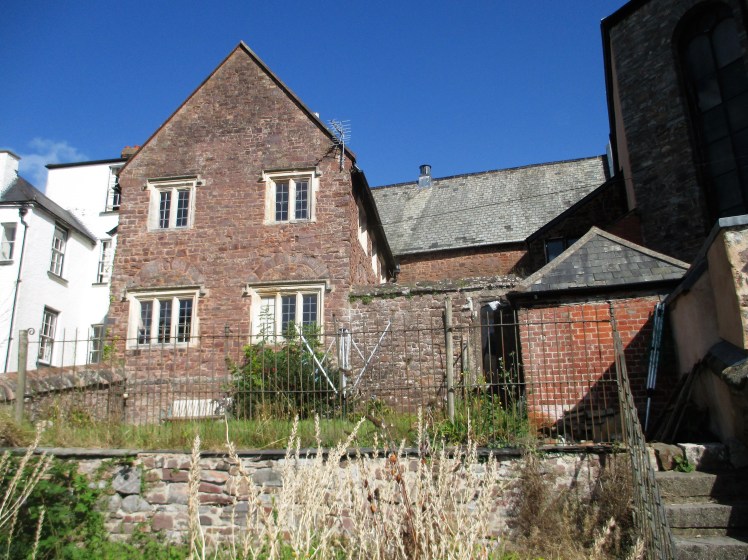
The Master’s House, Chilcot School (1611)
 Tiverton Civic Society