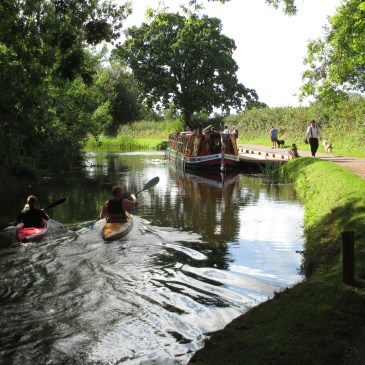
Mid Devon District Council defines Conservation Areas as follows:
‘Conservation areas are areas with a special character or quality which should be preserved or enhanced. The special architectural and/or historic nature of the area derives from the cumulative impact of groups of buildings and spaces rather than due to a singular outstanding building.
Areas are designated as conservation areas to ensure the character is preserved or enhanced. This does not mean that no change or development can take place, but, where changes do occur, they are appropriate for the context and setting of the area’.
‘Conservation is commercially very valuable. It gives an area its character, it creates places where people want to live and work. Its not just about preserving an old building, it’s a record. A record of the continuity of this town that we live in, and a reminder that we are only looking after it for a bit…..Conservation is about the future certainly not about the past.
The success of Britain is dependent on working on what is good, not working on what’s just new….It’s down to all of us to preserve our heritage.’
Griff Rhys Jones, quoted in The Times 18.12.2024.
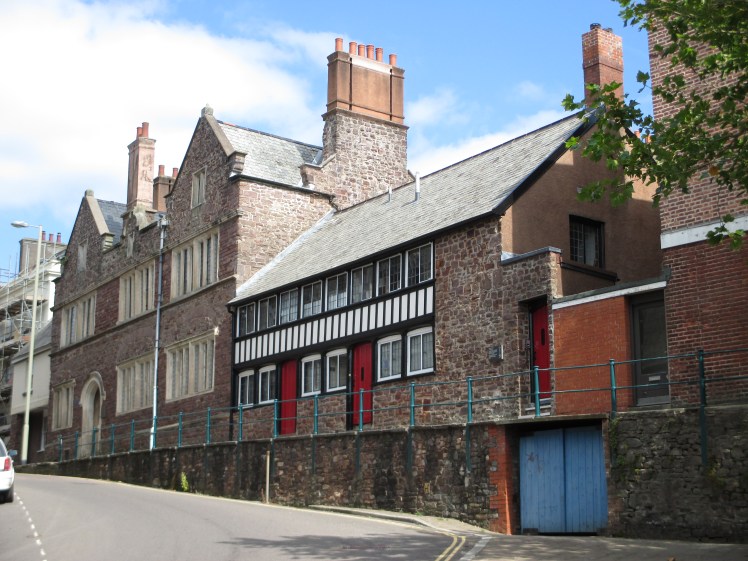
Tiverton has three Conservation Areas. These maps show the Tiverton Conservation Area and part of the Grand Western Canal Conservation Area. Maps of the Blundell’s Conservation Area and the whole of the Grand Western Canal Conservation Area can be accessed below.
Tiverton Conservation Area (1972, extended and revised in 1992 and 2005). The first conservation area in England was established at Stamford in Lincolnshire in September 1967, and, there are now over 10,000. To mark the fiftieth anniversary Historic England have, following a submission by this society, selected the Tiverton Conservation Area as one of six examples of ‘amazing conservation areas’ in England . However, they also categorize it as ‘Heritage at Risk‘, the condition being ‘very bad’ and ‘deteriorating’.
In October 2018 the Tiverton Conservation Area was, following nomination by this society, placed 8th out of 249 entries in a competition organised by Civic Voice after a national vote to find ‘England’s Favourite Conservation Area.’
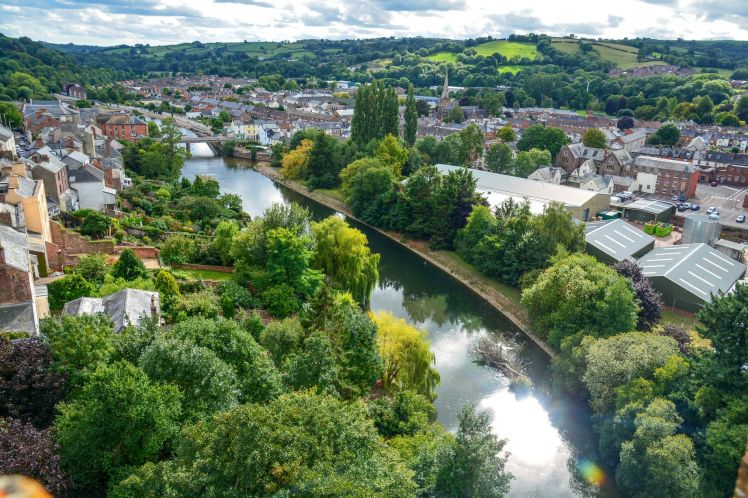
.The Grand Western Canal Conservation Area (1992). Revised in 2024. (This includes the whole of the Grand Western Canal, the western end of which is located in Tiverton). ‘Perhaps the most extraordinary canal in England’ (Charles Hadfield). There are over twenty listed stuctures, including bridges, a tunnel, culverts and lime kilns, and, apart from the canal, its banks and boundaries, the Conservation Area also includes areas of woodland, car parks, picnic areas, and the land on which two listed buildings, the Ayshford Chapel and Canonsleigh Abbey, is located. In November 2012 a serious breach in the canal bank near Halberton necessitated closure of a large section of the canal until repairs were completed the following, it being reopened in March 2014.
In March 2024 Mid Devon District Council published a draft Grand Western Canal Conservation Area Appraisal and Management Plan which proposed changes to some of the boundaries, which included the removal [‘delisting’) of two areas in Tiverton, Snakes Wood and land east of Tidcombe Hall, the removal of the latter being contentious because of the possibility of future housing development at this location. The final decision was to retain the latter as part of the Conservation Area, while removing Snakes Wood.
Grand Western Canal Conservation Area Draft – Final
(The final document will include the agreed changes to this draft by the MDDC Cabinet).
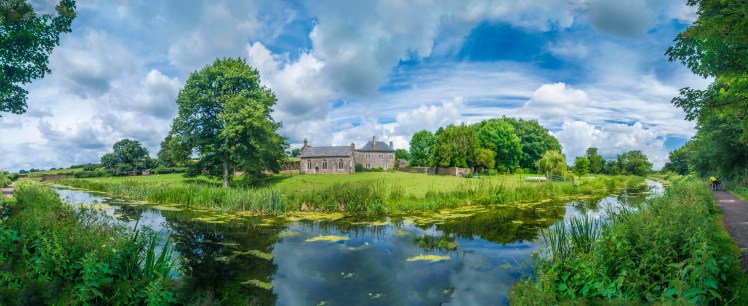
Relining the Aqueduct. January 2020 Blundell’s Conservation Area (2014). The cover of this Appraisal and Management Plan includes a map. Parts of the adopted conservation area were included on the recommendation of Tiverton Civic Society.
Within, or partially within, the civil parish of Tiverton, conservation areas also include those at Chettiscombe, Chevithorne, Cove, Cove Hill, Bickleigh and Bolham.
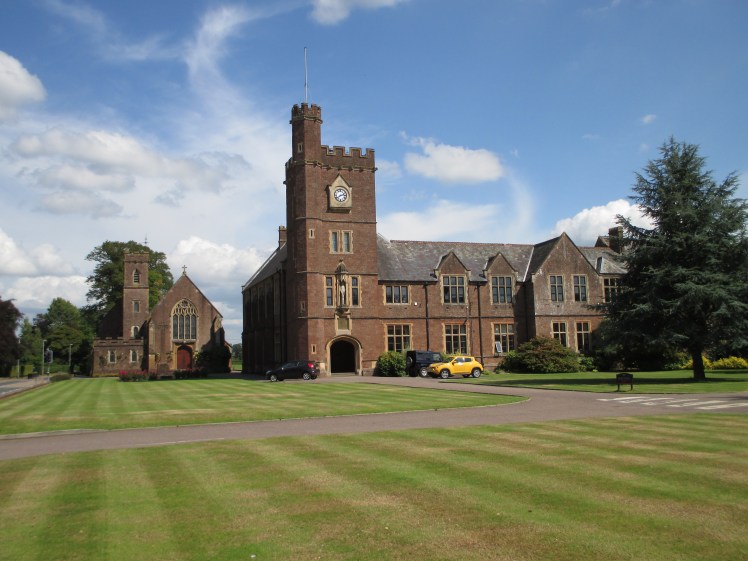
Blundell’s School, at the heart of the Blundell’s Conservation Area

 Tiverton Civic Society